

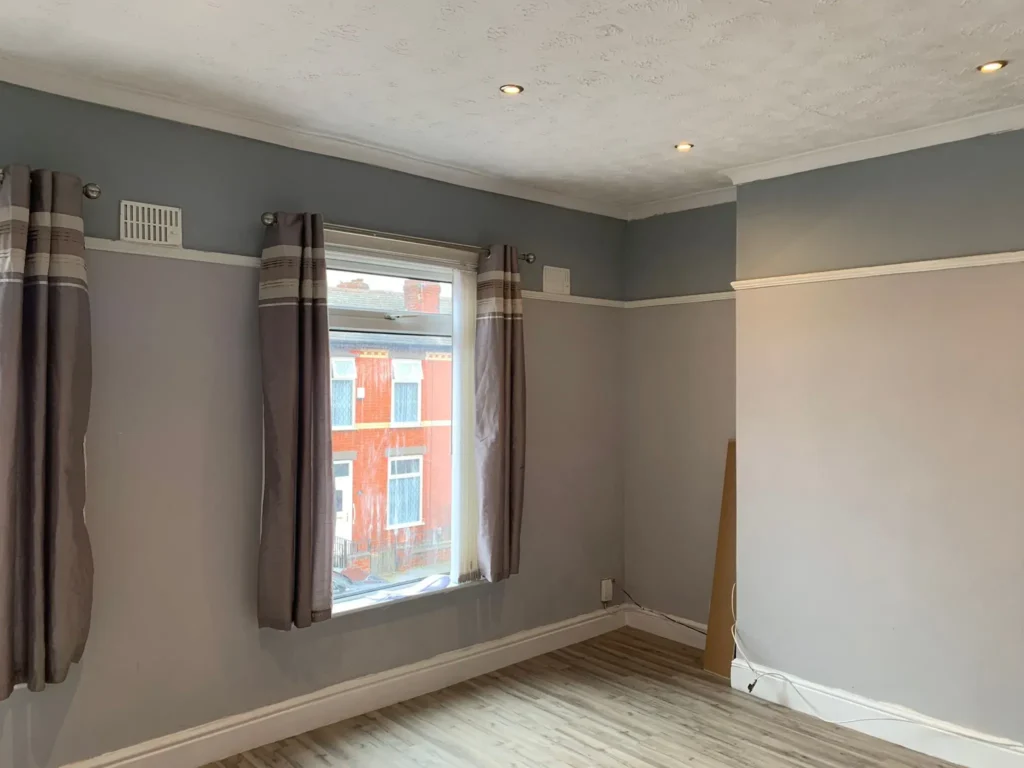
Wallpaper removal looks like the easy part of redecorating. The paper usually comes off without much drama; the wall it leaves behind is the real job. Strip it carelessly and you gouge the plaster, leave paste on the surface and get paint that cracks within weeks.
Here is how we strip each type of paper as part of our professional wallpapering service, and what happens to the wall afterwards.
In short
- Score and soak ordinary paper; steam woodchip, painted-over paper and stubborn layers.
- Non-woven paper peels off dry; vinyl peels too, but leaves a backing to soak off.
- Every trace of paste is washed off, or new emulsion can craze and crack.
- Older walls often hide blown plaster, old distemper or earlier layers of paper.
- Small defects are filled; widespread damage calls for a skim by a plasterer.
- Bare or patched walls get a mist coat or primer before any finish paint.
Know what you are stripping first
Every wallpaper removal job starts with the same question: what kind of paper is on the wall? The answer decides whether you need a bucket, a steamer or both. It also warns you how much damage to expect underneath.
Pick at a corner near the skirting, then compare what happens with the list below.
- Non-woven paper often comes away in whole lengths when pulled dry from a bottom corner.
- Vinyl has a wipeable plastic face that peels off, leaving a thin paper backing behind.
- Standard printed paper tears into small pieces and darkens quickly when wetted.
- Woodchip is lumpy, heavy and almost always painted, sometimes many times over.
- Painted-over paper of any kind resists water, because the paint film stops it soaking in.
- Lining paper is plain and thin, and is often pasted straight onto old plaster beneath the top layer.
In a lot of Manchester houses, you will find more than one of these. Victorian terraces in Withington, Didsbury and Levenshulme often have several layers, with the oldest stuck directly to lime plaster.
Steam, soak or score: choosing a wallpaper removal method
Water is what breaks down wallpaper paste. The three methods are simply different ways of getting it through the paper and into the adhesive.
Scoring
Scoring punches small holes in the face of the paper so water can reach the paste. A scoring tool such as the Zinsser PaperTiger is rolled over the wall with light pressure. Press too hard and the plaster underneath is marked, and every mark then has to be filled.
Soaking
Soaking suits standard paper and vinyl backings. Warm water is applied with a sponge or pump sprayer, often with a stripping solution such as Zinsser DIF added. It is left for ten to fifteen minutes, then lifted with a wide stripping knife held low to the wall.
Work in manageable sections and keep them wet. Paper that dries out before you reach it has to be soaked all over again. Importantly, keep water well away from sockets and switches, and isolate the circuit at the consumer unit before working around them.
Steaming
A wallpaper steamer is the answer for woodchip, painted-over paper and heavy layers. The plate is held against the wall until the paper softens, then moved on while the softened section is stripped behind it. It is hot, wet work, so gloves are worth wearing, and goggles for ceilings.
However, steam is not gentle. Hold the plate in one place too long and old plaster softens and comes away with the paper. On plasterboard, the paper face of the board can blister and tear.
The table below matches each paper to the method that usually works best.
| Paper type | Best removal method | What to watch for |
|---|---|---|
| Non-woven | Peel dry from a bottom corner | Very little; any residue is washed off |
| Vinyl | Peel the face dry, then soak the backing | Backing left on the wall can bubble under paint |
| Standard printed paper | Score lightly, then soak | Tears into small pieces, so it takes patience |
| Woodchip | Score, then steam | Gouges soft plaster if the knife digs in |
| Painted-over paper | Score through the paint, then steam | Several layers may be bonded together |
| Lining paper | Soak or steam, depending on the paint over it | Often lifts the plaster surface with it |
Removing woodchip and painted-over wallpaper
Woodchip was hugely popular in British homes through the 1970s and 1980s, partly because it hid poor plaster. That is worth remembering when it comes off. Whatever it was covering is usually still there.
Several coats of emulsion turn woodchip into something close to a shell. The paint is scored first, then the steamer does most of the work. Stripping knives are kept at a shallow angle, with the corners slightly rounded, so they do not dig in.
Painted-over vinyl is often the worst of all. The plastic face and the paint together keep water out almost completely. It helps to peel the vinyl face away wherever an edge will lift, then steam the backing.
Stripping painted paper like this is a regular part of our woodchip removal and dated-finish work in Middleton. Woodchip on ceilings is slower again, because all the steaming is done overhead.
What turns up under the paper
Once the last scrap is off, the wall tells you its history. In pre-war houses in particular, the same few problems come up again and again.
Blown plaster
Old lime plaster gradually loses its grip on the brick or laths. Paper can hold a loose patch in place for decades, and then it comes away with the strip. Tap the wall with your knuckles: a hollow, drummy sound means the plaster has blown.
Old distemper
Before modern emulsion, many walls and ceilings were finished in distemper, a chalk-based paint. Rub it with a damp finger and it comes off white and powdery. Emulsion will not bond to it and soon flakes. Therefore it is washed off as far as possible, and the surface is sealed with a stabilising primer.
Damp, mould and textured coatings
Black mould on the back of the paper, tide marks or white salts on the plaster all point to moisture. That needs its cause found, not a coat of paint. Our guide to painting a damp wall explains why.
Textured coatings sometimes turn up too, particularly on ceilings. Older ones can contain asbestos, so they are tested before anyone scrapes or sands them. Our guide to covering Artex ceilings explains the options.
Washing off wallpaper paste residue
This is the step most people skip, and it is behind a lot of the cracked paint we are asked to put right. Dried paste stays on the wall as a thin, invisible film. When water-based emulsion goes over it, the paste softens again and the paint crazes as it dries.
The wall is washed down with warm water and sugar soap, using a sponge and a scouring pad. The water is changed often, because dirty water simply spreads paste around. Then the wall is rinsed with clean water.
To check, run a damp hand over the surface. If it feels slippery or tacky, there is still paste there. Where traces will not shift, a shellac-based primer such as Zinsser B-I-N seals them in before painting.
Afterwards, let the wall dry properly. After a day of steaming, that can take longer than you would think, especially in a cold house in winter.
Patch or skim: deciding what the wall needs
Most walls need some filling after stripping. The question is whether patching will give a finish you are happy with, or whether you are simply chasing defects.
Patching is fine when the damage is limited:
- small gouges and knife marks, filled with a fine powder filler such as Toupret or Easi-Fill and sanded flush
- hairline cracks, raked out slightly and filled
- the odd small blown area, cut back to sound plaster and built up in layers
A skim is the better answer when blown patches cover large areas, the surface is crumbling, or the wall is a patchwork of old repairs. Under raking light, a heavily patched wall never looks right. Skimming is a plasterer’s job, and we will tell you honestly when a wall has reached that point.
There is a middle route for walls that are sound but rough. Lining paper, hung horizontally, evens out minor ripples and gives a consistent surface. It is explained in our guide on how to wallpaper around windows, sockets and radiators.
Getting the wall ready for paint
Once the wall is clean, filled and sanded, it is dusted down and primed. This is the core of our surface preparation and finishing work. What the wall needs depends on what was under the paper.
- Fresh skim: left to dry fully, then given a mist coat of watered-down contract matt, as set out in our guide to painting new plaster with a mist coat.
- Old plaster with filler patches: the filled areas are spot-primed first, so they do not flash through the finish coats.
- Water stains or nicotine: sealed with a stain block such as Zinsser Cover Stain or B-I-N.
- Chalky surfaces or distemper: bound with a stabilising primer before anything else goes on.
Two finish coats follow, with the manufacturer’s recoat time between them. That is typically a few hours for water-based emulsion. A wall being papered again is sized or given a wallpaper primer instead.
If you would rather not pick up a roller, this is where our interior painting team takes over.
When DIY is fine and when it isn’t
Plenty of wallpaper removal is well within reach of a patient homeowner. One or two layers of standard or vinyl paper, on sound plaster, in a bedroom you can spare for a week? Hire a steamer and go for it.
It is worth calling a decorator when:
- the paper is painted woodchip across several rooms or a whole house
- ceilings or stairwells are involved, where steaming overhead is slow, hot and awkward
- the plaster is old lime and already coming away in places
- the walls are plasterboard and the face is tearing
- a rental property has to be turned round between tenants by a fixed date
That last one is routine in our landlord and HMO turnarounds in Withington, where everything has to fit a short empty period.
Where we draw the line
We will not paint over sound-looking wallpaper to save a day. It is one of the most common shortcuts in decorating, and it stores up trouble.
Water-based paint wets the paper, which can make seams lift and bubbles appear as it dries. Even when it goes on well, the paint locks the paper to the wall.
The next person to strip it then has to score through a paint film and steam every inch. As a result, a day saved now doubles the job next time. So the paper comes off first, every time.
Get a free quote in Manchester
If you would rather leave the wallpaper removal to someone else, we are happy to take a look. We work as house painters across Manchester and Greater Manchester, and we are fully insured. The cost depends on the size of the rooms and what is under the paper, so we always see it first.
Call us on 07835 733353 or request a free, no-obligation quote.
Frequently asked questions
Is it better to steam or soak wallpaper off?
It depends on the paper. Standard printed paper and vinyl backings usually come off well after scoring and soaking with warm water. Woodchip, painted-over paper and several layers stuck together need a steamer, because water alone cannot get through the paint film. Steam is harsher on old plaster and plasterboard, so the plate is kept moving and never held in one spot for long.
Can you paint over wallpaper instead of removing it?
You can, but it is rarely a good idea. Water-based paint wets the paper, so seams can lift and bubbles can appear as it dries. Even if it looks fine at first, the paint seals the paper to the wall, which makes it far harder to strip later. Removing the paper and preparing the wall properly gives a better, longer-lasting finish.
How do you get wallpaper paste off walls before painting?
Wash the wall with warm water and sugar soap, using a sponge and a scouring pad, and change the water often. Rinse with clean water and let the wall dry. If it still feels slippery or tacky when you run a damp hand over it, wash it again. Stubborn traces can be sealed with a shellac-based primer so the emulsion does not crack.
What should I do if plaster comes off with the wallpaper?
Stop and check how widespread it is. Tap the surrounding wall with your knuckles: a hollow sound means the plaster has blown and will keep coming away. Small areas can be cut back to sound plaster and filled in layers. If large sections are loose or crumbling, the wall needs a plasterer to skim it before it is decorated.
Does fabric softener help remove wallpaper?
A splash of fabric softener or washing-up liquid in warm water can help the water soak into porous paper, which is why it is such a popular tip. It does little on vinyl or painted paper, where water cannot get through without scoring or steaming. Whatever you add, the wall must be washed and rinsed afterwards so no residue is left under the paint.
Do walls need skimming after wallpaper is removed?
Not always. Many walls only need filling, sanding and priming. A skim makes sense when the plaster is blown over large areas, crumbling, badly gouged or covered in old patch repairs that would show through paint. If the wall is sound but slightly uneven, lining paper can be a practical middle option before painting or papering.
