

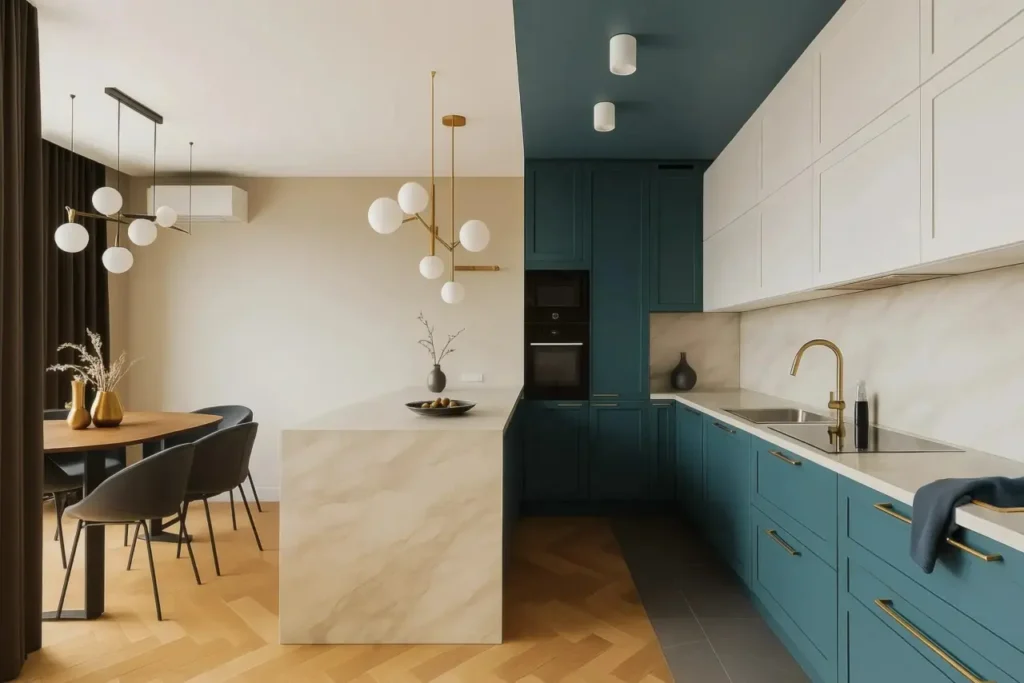
Fresh plaster is the one surface in a house that punishes impatience. It looks finished within a day or two, it feels dry to the hand, and it is nowhere near ready. Paint it too soon, or seal it with the wrong thing first, and it will let go — sometimes in sheets, usually within a year, and always in front of guests.
In short
- New plaster is porous and still drying. It has to be primed with a thinned mist coat, not sealed.
- A skim over plasterboard usually needs five to seven days. Fresh plaster over masonry needs weeks, not days.
- Judge it by colour, not by the calendar — an even, pale, chalky surface with no darker patches anywhere.
- Never use PVA to seal plaster before painting. It is the single most common cause of paint failing on a new wall.
Why new plaster behaves differently from any other wall
Two things are going on at once, and they cause different problems.
It is extremely absorbent. Fresh plaster has high suction — it pulls water out of whatever you put on it, and it does so fast. A normal coat of emulsion applied straight onto it loses its water almost instantly, before the paint film has had a chance to form properly. What you get is a coat sitting on the surface rather than gripping into it.
It is still releasing moisture. Plaster carries a great deal of water, and that water leaves through the face of the wall over days or weeks. Seal it in behind a coating and it will find its way out anyway, taking the coating with it.
Everything else in this article follows from those two facts. The mist coat solves the first. Waiting solves the second. Get them the wrong way round and no amount of expensive paint will save it.
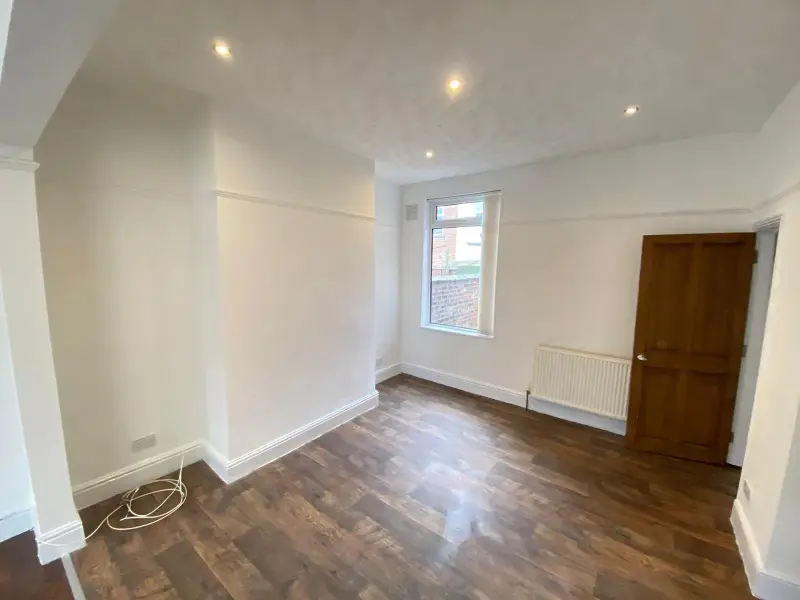
How long to wait before painting
Drying times by build-up
What matters is not the skim you can see but everything behind it. A thin skim on plasterboard is a completely different proposition from fresh plaster over brick.
- Taped and jointed plasterboard, no skim — 2 to 3 days. Only the joint filler has to dry.
- Skim coat over plasterboard — 5 to 7 days. The standard new-build wall and ceiling.
- Patch repairs in an existing wall — 1 to 2 weeks. Small areas, surrounded by plaster that is already dry.
- Backing plaster and skim on masonry — 2 to 4 weeks. Two coats, and far more water in the wall.
- Fresh plaster on a solid or party wall — 3 to 4 weeks. Chimney breasts are the slowest of the lot.
- Sand-and-cement render, then skim — 4 to 6 weeks. Do not rush this one under any circumstances.
Add time for winter, for a room with the windows shut, and for anywhere with no heating on. Ventilation matters more than warmth — a warm sealed room dries the surface and traps the rest.
The colour test that beats the calendar
Plaster is darker where it is still damp. That is the whole test, and it is far more reliable than counting days.
A wall that is ready is an even, pale, chalky colour right across. A wall that is not shows darker patches — and they appear in predictable places. Behind radiators. In the corners. Along the bottom of the wall. At the junction with the ceiling. Those are the last areas to give up their moisture, and they are exactly where people stop looking once the middle of the wall has gone pale.
Check in daylight. Artificial light flattens the difference and a wall that looks uniform under a bulb at nine in the evening will show you three dark patches the next morning.
What a mist coat is, and how to mix one
A mist coat is watered-down emulsion, applied as the first coat so it soaks into the plaster rather than sitting on it. It is not a primer you buy — it is a coat you make.
Use contract matt emulsion, thinned with water. Somewhere around twenty to thirty per cent water is the usual starting point, adjusted to how thirsty the plaster is. Very absorbent plaster wants it thinner. Check what the tin says, because manufacturers differ.
It has to be contract matt, not vinyl silk and not a designer emulsion. Those contain vinyl and acrylic that form a film on the surface. That is exactly what you do not want for a first coat — you want something that penetrates. Purpose-made new-plaster primers do the same job and are a perfectly good alternative if you would rather not mix.
Apply it like a normal coat, just thinner. It will look streaky and patchy when it dries and that is entirely normal — it is not a finish coat, it is a bond. Two full coats go on top of it once it has dried.
One warning: thinned emulsion runs and spits far more than you expect, particularly off a roller and onto a ceiling. Sheet everything properly first.
Why PVA is the wrong answer
This is the mistake we are called out to fix more than any other, and it is almost always well-intentioned. Somebody has been told that new plaster needs sealing, so they have brushed on diluted PVA.
PVA is an adhesive. Diluted or not, it dries as a plastic film across the face of the plaster. Emulsion then bonds to that film rather than to the wall — and because PVA can soften again when it meets moisture, the film eventually lets go. When it does, it takes the paint with it, often in a sheet you can peel off with your fingers.
Where the confusion comes from: PVA genuinely is used in plastering, as a bonding agent applied to a substrate before the plaster goes on. That is a real and correct use of it. Sealing finished plaster before painting is not. The word “sealing” is doing all the damage — new plaster does not want sealing, it wants priming.
If a wall has already been PVA’d, it is not necessarily a disaster, but it does change the job. The film has to be dealt with rather than painted over and hoped about, and that is worth a conversation before anyone opens a tin.
Painting plasterboard directly
Boards that have been taped and jointed but not skimmed can be painted, and on new builds they often are. There is one thing to watch.
Plasterboard paper and joint filler absorb at different rates. Paint straight over them and the joints show through as visible bands running across the wall — lighter or duller stripes wherever the filler is. It is called flashing, and it is unmistakable once you have seen it.
The fix is to prime the whole surface first, either with a drywall primer or with a mist coat, so the board and the filler are brought to the same absorbency. Then two full coats. Where the finish really matters — a hallway with a window at the end, or any wall in raking light — skimming the board is worth the extra week it costs.
Flashing, patchy suction and how to avoid both
Flashing is variation in sheen or colour across a wall that should be uniform. On new plaster it usually shows up over filler, over joints, over patch repairs, or wherever the mist coat went on unevenly.
Three things prevent it. A full, even priming coat rather than a token one. Two proper finish coats rather than one and a touch-up. And rolling in a consistent direction, keeping a wet edge, so no part of the wall is being rolled over after it has begun to set.
If it has already happened, another full coat usually solves it. Spot-touching the patches almost never does — it simply adds a third sheen to the wall.
One more cause worth naming: painting before the plaster was dry. If the flashing follows the shape of where the damp patches were, no amount of extra coats will fix it. The wall has to finish drying first.
New build extras: nail pops, shrinkage cracks and builder’s finish
Nail pops. Small circular bumps or chips where a plasterboard screw or nail has backed out as the timber behind it dried and shrank. They are refixed, filled, sanded and spot-primed. Filling without refixing means doing it again.
Shrinkage cracks. A new building dries out and settles over its first year or two, and hairline cracks at ceiling lines, around door openings and along board joints are normal rather than defects. Fill them once the movement has largely stopped. Fill them in month two and you will be filling them again in month eight. At wall and ceiling junctions, flexible caulk beats hard filler, because a hard filler simply cracks in the same line.
Builder’s finish. Developers typically leave one thin coat of contract matt throughout. It marks if you look at it and rarely covers evenly, but it is porous, which makes it a good base to work on. Fill and sand where needed, then two proper coats in a colour you actually chose.
Plenty of this comes up on new builds and fresh plaster across Salford, where more homes have gone up in the last decade than anywhere else in Greater Manchester. The pattern is the same on every estate.
Ceilings and freshly skimmed rooms
Ceilings follow the same rules as walls, with one difference — they hold moisture longest around the perimeter, so check the edges rather than the middle before deciding a ceiling is ready.
A ceiling that has been skimmed over an old textured ceiling is new plaster and behaves exactly like any other new plaster. It wants the same drying time and the same mist coat. It is worth saying because a skimmed ceiling often looks ready sooner than it is, and because people who have just spent money getting rid of Artex are understandably keen to see it finished.
When you do come to paint it, cut in the perimeter first, then cross-roll — one direction, then at right angles to it. And go easy on the roller. A thinned mist coat overhead is a messy business.
When to call a professional
Mist coating is genuinely within reach as a DIY job. Thinning emulsion is not difficult, and rolling a flat wall is not skilled work. If you are painting one room after a plasterer has been in, there is no reason not to do it yourself.
Where it goes wrong is the judgement, not the technique. Deciding whether a wall is dry, spotting that the dark patch behind the radiator means the whole wall needs another week, recognising that flashing is coming from uneven suction rather than a thin coat — that is the part that comes from having done it a few hundred times.
The other reason to hand it over is scale. A whole new-build house is a lot of wall, and spraying is dramatically faster than rolling in an empty property. Our approach to preparation is set out on how we prepare and finish, and the same discipline applies to every interior painting job we take on, new plaster or otherwise.
