Mist coats on fresh plaster
Thinned contract matt worked into the surface so it bonds, followed by two full coats. The step most people skip.


5-Star Rated · Fully Insured · Free Quotes
More new homes have gone up across Salford in the last decade than anywhere else in Greater Manchester. Those walls are freshly plastered, and fresh plaster does not behave like an old wall. House painters in Salford get called out constantly to fix paint that has flaked, flashed or peeled straight back off a new skim.
Almost always the cause is the same — the wall was sealed instead of primed, or painted before it had dried. As part of our Manchester house painters, every Salford postcode from M5 to M50 is covered, new build and older stock alike.

Services
Salford's housing splits two ways. New apartments and estates going up around Greengate, Middlewood Locks, Irlam and Walkden, and older terraced and semi-detached stock across Weaste, Swinton and Broughton. Both are covered, though they need different things.
Thinned contract matt worked into the surface so it bonds, followed by two full coats. The step most people skip.
Replacing thin builder's-finish magnolia with a proper two-coat scheme in a colour you actually chose.
Shrinkage cracks, nail pops and settlement gaps filled and made good once the building has finished moving.
Whole-house repaints, single rooms, ceilings, woodwork and stairwells across older Salford housing too.
Render, masonry, timber and metalwork on terraces, semis and estate housing throughout the city.
Feature walls and full rooms, hung on lining paper where a new skim is too fresh to take paper directly.
Roughly 60 per cent of time on site is preparation, and on a new build most of that is patience rather than sanding. Plaster has to dry all the way through before a permanent coating goes on. Painted too early, moisture pushes back out and takes the paint with it.
The rest is specification. The full method is on our preparation and finishing page. Wherever the property sits, a free, no-obligation quote comes first, and we will say plainly if a wall is not ready yet.
Fresh plaster
New plaster is porous and thirsty. It pulls moisture out of whatever you put on it, and it is still drying long after it looks dry. Nearly every failed new-build paint job traces back to one of these three.
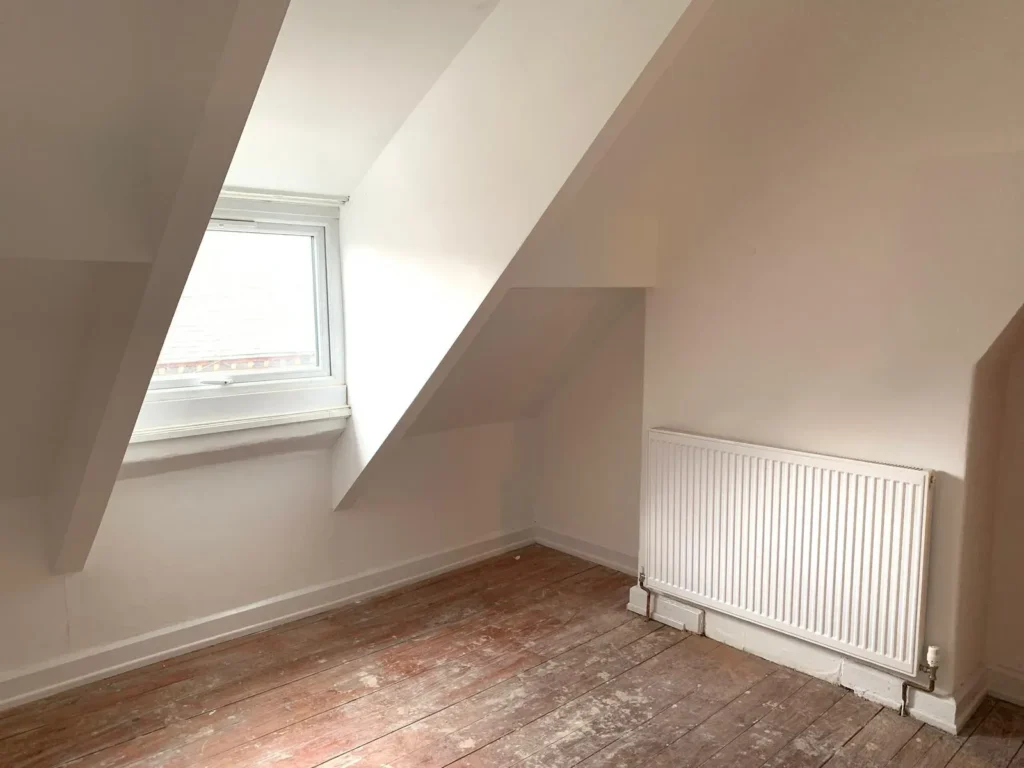
The most common mistake, and it is usually well-meant. PVA leaves a plastic film on the surface. Emulsion then sits on that film instead of keying into the plaster, and months later it peels away in sheets. New plaster does not want sealing. It wants priming.

A mist coat is contract matt emulsion thinned with water, so it soaks in and grips. Vinyl silk and most designer paints are too thick to penetrate — they skin over and lift. The mist coat is the bond. Everything after it is just colour.

Plaster darkens where it is still damp. Paint over those patches and they flash through as dull marks that no amount of extra coats will hide. Uniform pale colour across the whole wall is the signal, and a calendar is a poor substitute for looking.
Drying times
The honest answer is that it depends on the build-up behind the skim, the time of year and how well the room is ventilated. A thin skim on plasterboard dries far faster than fresh plaster over masonry. These are the working guides we plan Salford jobs around.
Guides only, and winter work runs longer. The real test is colour — an even, pale, chalky surface with no darker patches anywhere, including behind radiators and in corners.
The process
No guesswork, no surprises and no deposit chasing. Three steps, start to finish.
On new plaster the first job is deciding whether it is ready. If it is not, you get told, along with a realistic date — rather than a quick job that fails by spring.
Cracks and nail pops filled, a thinned mist coat worked in, then two proper finish coats. Floors and second-fix joinery are protected throughout.
We go round the finished rooms with you in good light, looking specifically for flashing and patchy suction. Anything that needs another coat gets one.
Areas covered
The whole City of Salford is served, from the central postcodes out to Irlam and Little Hulton.
Two Salford towns have pages of their own — our Eccles house painters and Worsley house painters. For general redecoration across the city, including apartment work in the Quays, see our Salford painters and decorators page. Recent finishes are on our painting projects page.
Our projects
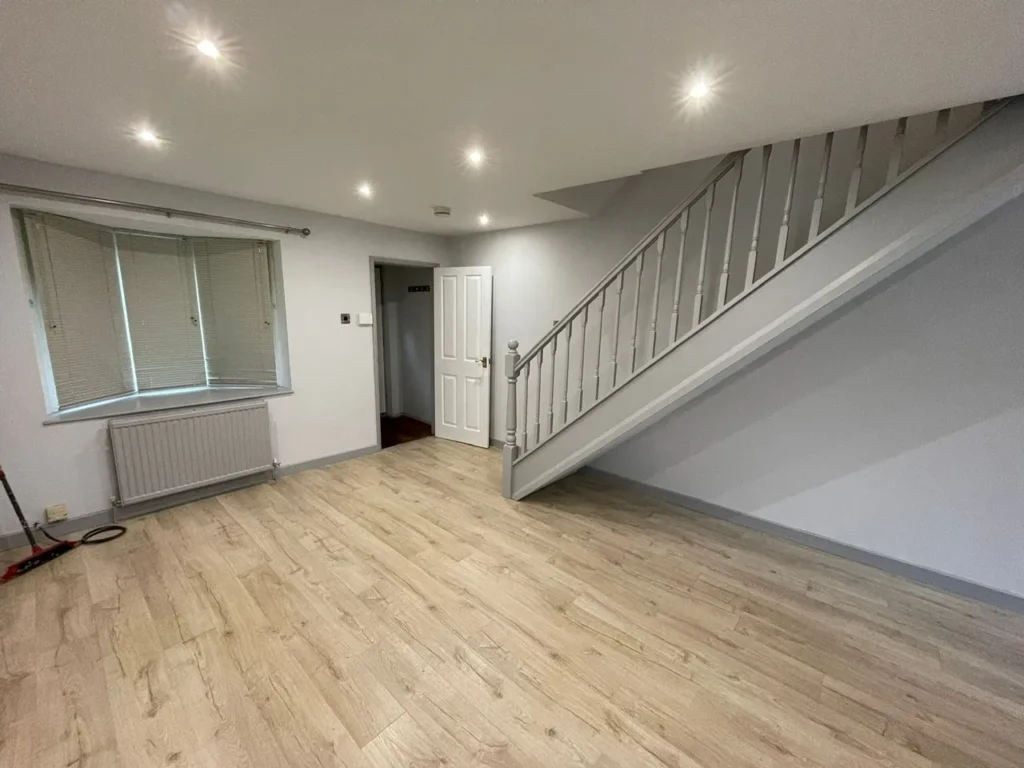
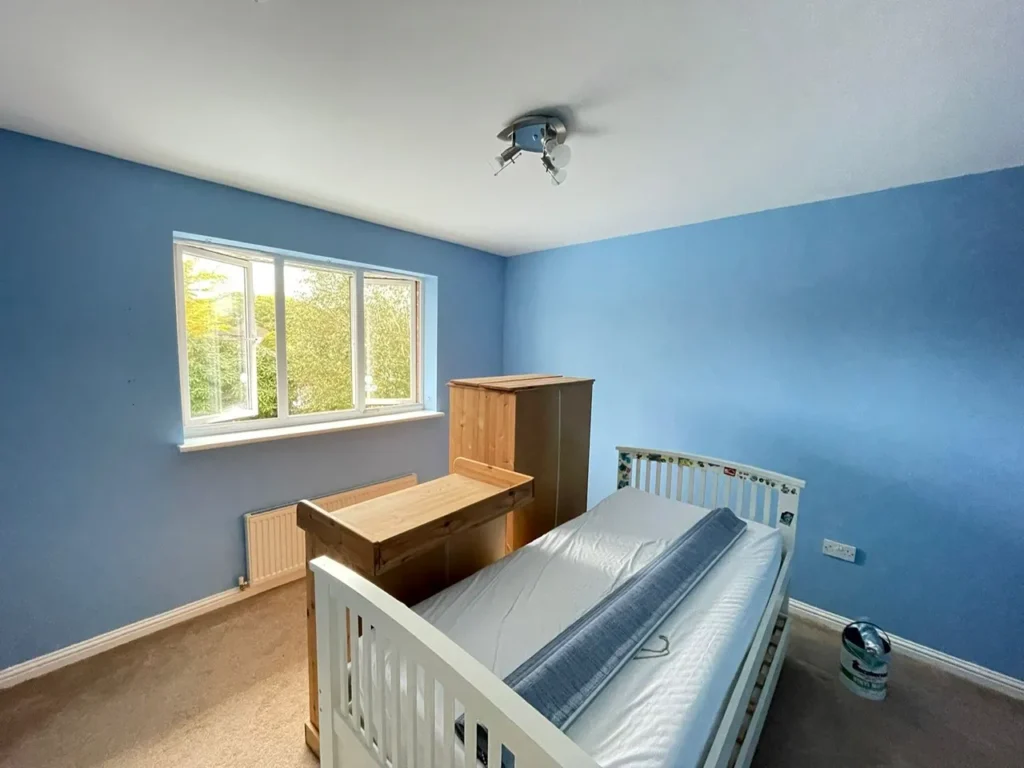
Our completed projects show the standards, attention to detail and professional workmanship brought to every job. From Salford new builds to commercial and industrial property, each one reflects durable finishes and clean execution.

Questions
A mist coat is contract matt emulsion thinned with water — usually somewhere around twenty to thirty per cent, adjusted to how thirsty the plaster is. Thinned down, it soaks into the surface and forms the bond that everything else relies on. Skip it and the first full coat sits on top rather than gripping, which is why so much new-build paint comes away with the masking tape.
A skim over plasterboard is usually ready in five to seven days. Backing plaster and skim on masonry needs two to four weeks, and fresh plaster on a solid or party wall can want three to four. Winter runs longer. Rather than counting days, look at the colour — it should be evenly pale and chalky right across, with no darker patches in corners or behind radiators.
No — and this is the single most common cause of failed paintwork we are called to in Salford. PVA dries as a plastic film across the surface. Emulsion then bonds to the film rather than to the plaster, and once any moisture moves it lets go, often taking a sheet of paint with it. New plaster needs priming with a thinned mist coat, not sealing.
Yes, provided the joints have been taped and filled properly. Bare board and filler have different absorbency, though, so joints will flash through a single coat as visible bands. The board is primed first, then two full coats go on. Where the finish really matters, a skim over the board is worth the extra week.
Considerably. Developers typically apply one thin coat of contract matt, which marks if you look at it and rarely covers evenly. Because that coat is porous, it makes a good base. Walls are filled and sanded where needed, then given two proper coats in a colour of your choosing. The difference in depth and washability is immediate.
Yes, and timing matters. New buildings dry out and settle over the first year or two, so hairline cracks at ceiling lines, around openings and along plasterboard joints are normal rather than a defect. Filling them once the movement has largely stopped means they stay filled. Filling them in month two often means doing it twice.
Yes. Comprehensive public liability insurance covers all residential and commercial work across Salford and Greater Manchester, with documentation available on request — including for building management, developers and letting agents who need it on file before access is granted.
Get in touch
Let's make your space shine. Get in touch today and expect a response within 24 hours. Quotes are free, fixed and completely no-obligation.