

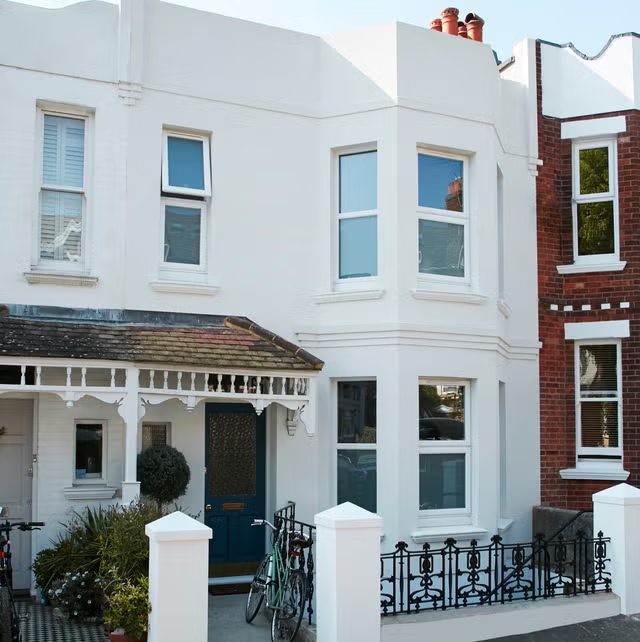
Before you paint brickwork, know one thing: it is very nearly permanent. Paint soaks into brick and mortar, and getting it off again is slow, specialist and hard on the brick. On some houses painting is exactly the right call. On others, particularly older solid-walled terraces, it quietly causes damage.
Here is how our exterior painting team decides, and what we use when the answer is yes.
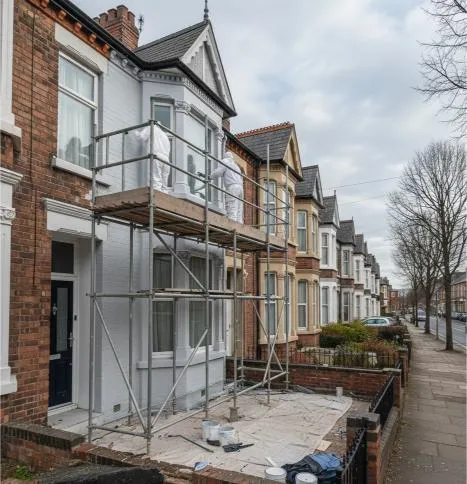
In short
- Painting brick is close to permanent, because removing paint later is slow and can damage the brick face.
- Most houses built before the 1920s have solid walls, and solid walls need to breathe.
- On solid walls, use a mineral silicate paint or limewash, not a standard acrylic masonry paint.
- Repoint in lime mortar, brush off salts and let the wall dry before any paint goes on.
- Listed buildings, and some homes in conservation areas, need consent first, so check with the council.
- Painting makes sense for mismatched extensions and brick that is already painted.
Painting brick is a one-way decision
Brick is porous. Paint does not just sit on it; it soaks into the face and the mortar joints. That is why it sticks, and also why it is so hard to remove.
Paint can come off brick, but not easily. Chemical strippers and specialist steam systems work slowly, and they rarely leave the brick exactly as it was. Abrasive blasting is worse. It strips the hard, fired outer face of the brick and leaves the softer core open to the weather.
Once you paint brickwork, the wall also goes on the maintenance list for good. Sound bare brick needs little beyond occasional repointing. A painted wall, by contrast, needs repainting on a cycle for as long as the house stands.
Look along any row of red-brick terraces in Levenshulme or Withington, and the painted house stands out. Sometimes that is the point. Often, ten years on, it is the one with the peeling paint.
Solid walls, cavity walls and why it matters
Most houses built before the 1920s have solid walls, with no cavity. That includes most Victorian and Edwardian terraces in Manchester. Cavity walls became common between the wars and standard after them.
There are three quick ways to tell which you have:
- Age. Pre-1920s usually means solid.
- Brick pattern. If some bricks are laid end-on, showing their short face, the wall is probably solid. All long faces usually means a cavity.
- Thickness. Measure at a window or door reveal. As a rough guide, a brick wall thinner than about 260mm is probably solid.
A solid wall handles water differently. It soaks up rain on the outside, then dries out in better weather, losing moisture from both sides. Soft brick and lime mortar are part of that system. Our guide to Victorian house painting covers how this shapes the rest of the job, inside and out.
On a cavity wall, the outer leaf keeps the rain off and the cavity stops it crossing. Paint on the outside is therefore less critical. Even so, a good microporous masonry paint, such as Dulux Trade Weathershield or Sandtex, is the sensible choice.
What happens when you paint brickwork with the wrong paint
Most standard masonry paints are acrylic. They are described as microporous, and they do let some vapour through. However, they are far less breathable than mineral paints or limewash. On a solid wall, that difference matters.
The wall still takes on moisture, from rain, from the ground and from inside the house. But it can no longer dry out freely through its face. Over time, the following tends to happen:
- Blistering and peeling. Moisture pushes the paint off from behind.
- Trapped salts. Salts crystallise behind the paint film instead of on the surface.
- Spalling. In a hard frost, water in the brick face expands and breaks the face away.
- Damp inside. Moisture that cannot escape outwards shows up on internal walls instead.
- A colder house. A wetter wall loses heat faster than a dry one.
Manchester’s damp westerly weather makes all of this worse, especially on exposed west-facing elevations. If damp already shows indoors, our guide to painting a damp wall explains why the fix starts with the cause.
Breathable masonry paint: silicate, limewash or leave it bare
If a solid wall is going to be painted, the finish has to let it breathe. There are two proven options, plus a third that people forget.
Mineral silicate paint. Silicate paints, such as Keim, bond chemically with brick, stone and render. They are highly vapour-permeable and very colourfast.
Traditional silicate paints need a bare mineral surface. Some sol-silicate versions, such as Keim Soldalit, are made for walls with sound older coatings, but check suitability with the manufacturer first.
Limewash. This is the traditional finish, and the most breathable of all. It is built up in several thin coats on a dampened wall, giving a soft, chalky look that weathers gently.
However, limewash needs renewing more often than paint, and it will not bond to modern coatings. It is also caustic, so eye protection is essential.
Leaving it bare. Sound brick, cleaned and repointed in lime, often looks better than any paint. It also needs very little upkeep.
When comparing products, ask for the vapour permeability figure, sometimes given as an sd value. The lower the number, the more breathable the paint. Rendered walls follow the same logic, and our guide to painting pebbledash and render covers them in detail.
Paint options for brick compared
| Option | Breathability | Suits solid walls? | Over existing paint? | Look and upkeep |
|---|---|---|---|---|
| Acrylic masonry paint | Low to moderate | Not recommended | Yes, if sound | Even finish, wide colour range, regular repainting |
| Mineral silicate paint | High | Yes | Sol-silicate types only, on sound coatings | Flat mineral matt, long-lasting colour |
| Limewash | Very high | Yes, especially soft brick | No, bare masonry only | Soft and chalky, renewed more often |
| Leave bare | The wall works as built | Yes | Not applicable | Occasional repointing only |
Repointing and efflorescence before painting brick
Paint will not rescue failing brickwork. Loose, cracked or missing pointing is raked out and repointed first. On Victorian brick, that means lime mortar.
Cement mortar is harder and less permeable than old, soft brick. Moisture then leaves through the brick instead of the joints, and the brick face spalls. Lime mortar is deliberately the weaker partner, so the joints wear rather than the bricks.
Repointing is a bricklayer’s job, and on an old wall it should be one who works in lime. Lime also cures slowly, so allow the time the mortar supplier recommends before painting.
Efflorescence is the white, fluffy salt that appears as a wall dries. It is brushed off dry with a stiff brush. It is never washed, because water dissolves the salts and carries them back into the brick. If it keeps returning, water is still getting in somewhere.
The rest of the preparation follows a steady routine:
- green growth killed with a fungicidal wash
- badly spalled bricks cut out and replaced by a bricklayer
- powdery surfaces treated with a primer that suits the chosen paint system
- the wall left to dry fully, which can take days or longer in cool weather
High-pressure jet washing is avoided on soft brick and lime joints, because it erodes both. All of this falls under our surface preparation and finishing work, and it decides how long the paint lasts.
Conservation areas and listed buildings
In most cases, you do not need permission to paint your house. Listed buildings are the main exception. Painting previously unpainted brick on a listed building usually needs listed building consent, and unauthorised works can be a criminal offence.
Conservation areas may also have an Article 4 direction. That removes some permitted development rights, and it can cover painting the front of a house. Check with your council’s planning or conservation officer before you start.
This matters in many of the older towns around Manchester. Stone-built homes in Ramsbottom’s conservation areas fall under Bury Council. Saddleworth stone cottages around Greenfield fall under Oldham Council. The same breathability rules apply to stone as to brick, and Historic England publishes useful guidance on caring for traditional buildings.
When painting brick is the right call
None of this means brick should never be painted. Sometimes it makes sense to paint brickwork, for example:
- A mismatched extension. New brick rarely matches century-old brick. Painting both can pull the house together, provided the finish suits the older wall too.
- Brick that is already painted. The decision has been made. Keep it maintained with a compatible paint, or have it professionally removed if it is failing.
- Stained or patched brick on a cavity wall. Where the wall is modern and sound, a quality masonry paint gives a clean, even finish.
One warning on already-painted solid walls. A breathable coat over an old non-breathable one gains very little, because the old film still blocks the wall. If paint is peeling from a solid wall and damp shows inside, get advice before adding another layer.
Oldham shows the full range. Among the brick terraces and mill conversions in Oldham, some suit paint and others are best left bare. Larger buildings and conversions follow the same principles through our residential and commercial painting service.
Where we draw the line
We will not paint a solid-wall Victorian terrace in a non-breathable masonry paint. It might look smart for a few years. But the moisture that used to leave through the face has nowhere to go. The bill then arrives as blistered paint, spalled bricks and damp inside.
We are happy to paint brickwork when it suits the wall. On a solid wall, that means a mineral silicate paint or limewash. If the brick is sound and handsome, we may well suggest leaving it alone.
DIY is fine on a garden wall or a ground-floor cavity-wall extension. However, get a professional involved for solid walls, listed buildings or anything needing scaffold. If there is damp, spalling or cracking, a surveyor should see it first.
Get a free quote in Manchester
Every wall is different, so the price depends on its condition, size and access. We will look at the brick, check the pointing and tell you honestly whether painting is the right call. As house painters across Manchester, we cover homes throughout the region.
For a free, no-obligation quote, call 07835 733353 or get in touch through our contact page.
Frequently asked questions
Is it a good idea to paint brick?
It depends on the wall. Painting suits a modern cavity-wall house, a mismatched extension or brick that is already painted. On older solid walls, usually houses built before the 1920s, standard acrylic masonry paint can trap moisture and cause peeling, spalling and damp. There, a breathable mineral silicate paint or limewash is the safer choice, and sound brick is often best left bare.
Can painted brick be returned to bare brick?
Sometimes, but it is slow, specialist work and rarely perfect. Paint soaks into the brick face and mortar, so chemical strippers or specialist steam systems are needed, often with some staining left behind. Abrasive blasting should be avoided, because it strips the hard fired face of the brick and leaves it open to frost and water damage. Treat painting as a permanent decision.
What paint should I use on a solid brick wall?
Use a highly breathable finish. A mineral silicate paint, such as Keim, bonds with bare brick and lets moisture escape freely. Limewash is the traditional alternative and is even more breathable, although it needs renewing more often. Standard acrylic masonry paints are less vapour-permeable and are best kept for modern cavity walls. Ask for the product’s sd value; lower means more breathable.
Does painting brick cause damp?
It can on older solid walls. These walls take in rain and then dry out through their faces. A low-permeability paint slows that drying, so moisture builds up, salts get trapped and damp can appear on internal walls. On modern cavity walls the risk is much lower. If damp already shows inside, find and fix the cause, with a surveyor’s help if needed, before any painting.
Do I need planning permission to paint my brick house?
Usually not. The main exceptions are listed buildings, where painting unpainted brick normally needs listed building consent, and conservation areas covered by an Article 4 direction, which can restrict changes to the front of a house. Unauthorised works to a listed building can be a criminal offence, so check with your local council’s planning or conservation officer before you start.
Should brickwork be repointed before painting?
Yes, if the pointing is loose, cracked or missing. Paint will not hold failing joints together, and water getting in behind will push it off. On older brick the joints should be repointed in lime mortar, not cement, by a bricklayer experienced with lime. Lime cures slowly, so allow the time the mortar supplier recommends before any paint goes on.
