

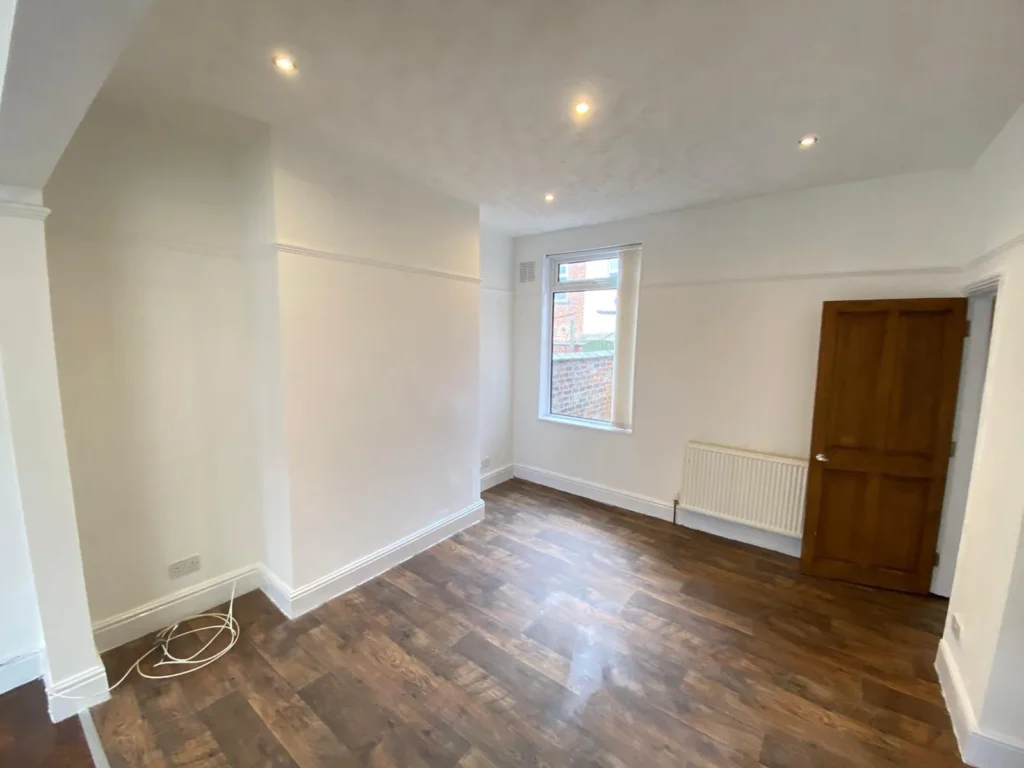
Victorian House Painting is not the same as painting a modern home. High ceilings, ornate coving, picture rails, dado rails, deep skirting boards, timber sash windows, and decorative plasterwork all demand a level of skill, patience, and preparation that goes far beyond a standard redecoration.
Manchester is rich with Victorian and Edwardian architecture. From the grand terraces of Didsbury and Chorlton to the workers’ cottages of Levenshulme and Fallowfield, period properties are woven into the fabric of this city. Each one has character. Each one has its own challenges.
This guide covers everything you need to know about painting a Victorian or Edwardian property in Manchester. Whether you are tackling interior restoration, Victorian terrace exterior painting, or simply choosing the right colours for a period home, this is your complete reference.
Looking for experienced period property painters in Manchester? Get a free quote from Prestige Painting Solutions.
Why Painting a Victorian Property Is Different
Victorian homes (built roughly 1837 to 1901) and Edwardian homes (1901 to 1910) were constructed to very different standards and with very different materials compared to modern houses. Understanding these differences is essential for a successful paint job.
Higher Ceilings
Most Victorian terraces in Manchester have ceiling heights of 2.7 to 3 metres on the ground floor, and sometimes higher in hallways. This means significantly more wall area per room compared to a modern home with standard 2.4 metre ceilings. It also means ladders, platform steps, or tower scaffolding are often needed, particularly in stairwells.
Ornate Plasterwork
Ceiling roses, coving, cornices, and decorative ceiling borders are common in Victorian properties across Didsbury, Chorlton, and Withington. These features need careful hand-painting with brushes rather than rollers. Cutting in around intricate mouldings requires genuine skill and a steady hand.
Period Woodwork
Deep skirting boards (often 200mm to 300mm tall), six-panel doors, panelled window shutters, picture rails, dado rails, and timber staircase spindles. Victorian woodwork is typically far more extensive and detailed than in modern homes. Each piece needs sanding, undercoating, and a top coat of satinwood or gloss, all by hand.
Timber Sash Windows
Original timber sash windows are one of the defining features of Manchester’s Victorian terraces. Painting sash windows properly requires the sashes to be moved during painting to access all surfaces. Frames often have glazing bars, horn details, and slim mouldings that need precision brush work. A single sash window can take 2 to 3 hours to paint properly.
Lime Plaster Walls
Many Victorian properties still have their original lime plaster rather than modern gypsum plaster. Lime plaster is softer, more porous, and more prone to hairline cracking. It needs gentle preparation and breathable paint. Aggressive sanding or non-breathable paints can damage lime plaster and trap moisture within the walls.
Layers of History
It is common to find 5 to 10 layers of old paint and wallpaper on Victorian walls. Each layer adds texture and irregularity. Thorough preparation is needed to create a smooth base for fresh paint. In some cases, complete paint stripping or professional plastering is the best path to a perfect finish.
Interior Victorian House Painting Properties in Manchester
Interior painting in a Victorian home requires a methodical approach. Here is how experienced period property painters tackle each element.
Walls and Ceilings
Walls are typically painted with two coats of matt or soft sheen emulsion. A mist coat is applied first if bare lime plaster is exposed. For properties with original lime plaster, breathable paints such as Earthborn, Lakeland Paints, or Little Greene are recommended as they allow moisture to pass through the wall rather than trapping it.
Ceilings in Victorian properties are often uneven, with subtle dips and rises that are part of the building’s character. A quality matt emulsion (Dulux Trade Diamond Matt or Crown Trade Clean Extreme) hides minor imperfections while providing a durable, wipeable finish.
Coving, Cornices, and Ceiling Roses
These decorative features are best painted with a small brush (1-inch or 2-inch angled brush) in a matching white or off-white. If the mouldings have been clogged with layers of old paint, careful cleaning and restoration of the detail may be needed before repainting. A shellac-based primer (Zinsser BIN) seals any staining before the top coat.
Picture Rails and Dado Rails
Picture rails sit high on the wall (typically at around 1.5 to 1.8 metres). Dado rails sit lower (around 900mm). Both are painted in satinwood or gloss, matching the colour of the other woodwork. The wall colour may differ above and below the dado rail, which is a classic Victorian decorating technique.
Skirting Boards
Victorian skirting boards are typically 200mm to 300mm tall with moulded profiles. They need sanding, priming any bare areas, an undercoat, and a top coat of satinwood or eggshell. Deep mouldings require brush work rather than rolling. Cutting in neatly at the junction between skirting and floor is essential for a professional finish.
Doors and Frames
Six-panel doors are standard in most Victorian properties. Each panel, stile, and rail needs to be painted in the correct sequence to avoid visible brush marks and drips. The traditional approach is to paint the mouldings first, then the panels, then the stiles, and finally the rails. A full door including frame typically takes 1.5 to 2 hours.
Explore our full interior painting services.
Victorian Terrace Exterior Painting in Manchester
Victorian terrace exterior painting presents specific challenges related to Manchester’s climate, the age of the building fabric, and the variety of exterior surfaces involved.
Rendered and Stucco Facades
Many Victorian terraces in Didsbury, Chorlton, and Whalley Range have rendered front elevations, sometimes with decorative stucco mouldings around doors and windows. Render needs washing, any cracks filled with flexible exterior filler, and two coats of breathable masonry paint. Dulux Weathershield or Sandtex Ultra Smooth are our standard recommendations.
Exposed Brickwork
Some Victorian properties have unpainted brick that homeowners want to keep exposed. Where brick has been previously painted, it can be maintained with breathable masonry paint. Painting bare brick for the first time is a significant decision as it is very difficult to reverse. We always advise homeowners to consider this carefully.
Timber Sash Windows (Exterior)
Exterior sash window painting is one of the most skilled tasks on any Victorian project. Each window may take 2 to 3 hours. The timber needs sanding, priming any bare areas, undercoating, and a top coat of exterior gloss or Sadolin Superdec. Glazing bars, putty lines, and horn details all require precision brush work.
Front Doors
The front door is the focal point of any Victorian terrace. Original panel doors deserve careful restoration. Stripping old paint (by hand or chemical stripper), filling imperfections, priming, undercoating, and applying a high-gloss finish creates a stunning entrance. Farrow & Ball, Little Greene, and Dulux Heritage all offer period-appropriate colours.
Bay Windows
Bay windows are a defining feature of many Manchester Victorian terraces. Painting the full bay (sills, frames, mullions, and surrounding render) requires careful sequencing and sometimes specialist access. The exposed position means quality exterior coatings are essential for long-term protection.
Gutters, Fascias, and Downpipes
Cast iron gutters and downpipes on Victorian properties can be repainted with specialist metal paint after wire brushing and priming. Modern PVCu replacements can be refreshed with exterior PVCu paint. Fascia boards are painted with exterior gloss or satinwood.
Learn more about our exterior painting services.
Choosing Heritage Colours for Victorian Properties
Colour choice is one of the most enjoyable parts of heritage painting in Manchester. Victorian homes look their best with period-appropriate colours that complement the architecture.
Popular Period Colour Palettes
The Victorians used rich, deep colours that are very different from the greys and neutrals popular in modern homes. Traditional Victorian interiors often featured:
- Deep greens (sage, olive, and bottle green) for hallways and dining rooms
- Rich reds and burgundies for reception rooms
- Warm creams and off-whites for ceilings and cornices
- Deep blues (navy, teal, petrol) for feature walls and bedrooms
- Earthy terracottas and ochres for accent details
For exterior colours, Victorian terraces traditionally used:
- Brilliant white or off-white for rendered facades
- Deep greens, blacks, or dark blues for front doors
- White or cream for window frames and sashes
- Black or dark grey for railings and metalwork
Recommended Heritage Paint Ranges
- Farrow & Ball: The market leader in heritage colours. Their Victorian-appropriate shades include Hague Blue, Railings, Calke Green, and Pointing. Premium priced but exceptional depth and finish
- Little Greene: Excellent heritage range with historically researched colours. Their Victorian Paint Collection is specifically curated for period properties. Slightly more affordable than Farrow & Ball with comparable quality
- Dulux Heritage: A more accessible price point with a curated range of period colours. Good quality and available through most trade suppliers
- Crown Period Collection: Budget-friendly heritage colours that work well for period properties
Modern Colours on Victorian Properties
Not every Victorian homeowner wants a traditional palette. Contemporary neutrals such as warm greys, soft whites, and muted greens work beautifully in period properties, allowing the architectural details to take centre stage. The key is choosing colours that complement the proportions and features of the room rather than fighting against them.
Victorian House Painting Costs in Manchester
Victorian House Painting properties typically cost more to paint than modern homes due to higher ceilings, more extensive woodwork, and the additional preparation needed. Here are typical costs for Manchester Victorian properties in 2026.
| Project Type | Typical Cost | Timeframe |
| Single room (including all woodwork) | £350 to £650 | 1.5 to 3 days |
| Hall, stairs and landing | £600 to £1,200 | 3 to 5 days |
| Full interior (3-bed terrace) | £1,800 to £3,500 | 8 to 14 days |
| Exterior front elevation | £800 to £1,500 | 2 to 4 days |
| Exterior (full, front and rear) | £1,500 to £3,000 | 4 to 8 days |
| Full house (interior + exterior) | £3,000 to £6,000 | 12 to 22 days |
| Sash window (per window, interior + exterior) | £120 to £250 | Half to full day |
Note: Victorian properties typically cost 20 to 40 percent more than equivalent-sized modern homes due to higher ceilings, ornate woodwork, and the additional preparation required. All prices are guide figures for Manchester in 2026.
For a personalised quote, contact Prestige Painting Solutions.
Preparation Challenges Specific to Victorian House Painting Properties
Every paint job starts with preparation. On Victorian House Painting properties, the preparation stage is particularly critical and often more involved than on modern homes.
- Multiple paint layers: 5 to 10 layers of old paint create thick, uneven surfaces. Heat guns and chemical strippers may be needed on woodwork. Walls may need careful scraping and sanding
- Lead paint: Properties built before 1960 may have layers containing lead paint. Dry sanding lead paint creates hazardous dust. Wet sanding or chemical removal methods should be used. If in doubt, a lead paint test kit costs a few pounds and provides peace of mind
- Lime plaster: More fragile than modern gypsum plaster. Requires gentle hand sanding, not machine sanding. Breathable primers and paints are essential
- Damp: Older properties are more prone to rising damp and penetrating damp. The source must be identified and treated before painting
- Timber rot: Sash window sills, external door frames, and fascia boards on Victorian properties are common locations for timber rot. Rotten timber must be cut back and repaired with wood filler or replacement sections before painting
- Uneven surfaces: Original plaster, old patch repairs, and previous wallpaper removal can leave walls uneven. Professional painters know how to work with these imperfections rather than highlight them
Read our full wall preparation guide for detailed step-by-step instructions.
See our preparation and finishing service for details on how we handle period property preparation.
Where to Find Victorian Properties in Manchester
If you own a Victorian property in Manchester, you are in good company. Here are the key areas where we regularly work on period homes.
- Didsbury: Grand Victorian villas and Edwardian semis. High ceilings, bay windows, and generous room proportions
- Chorlton: Mixed Victorian terraces with strong community character. Beech Road and surrounding streets feature classic period homes
- Withington and Fallowfield: Smaller Victorian terraces and workers’ cottages. Affordable period properties with bags of character
- Levenshulme: Up-and-coming area with excellent Victorian housing stock. Terraces with original features at accessible price points
- Whalley Range: Elegant Victorian and Edwardian villas with large gardens and impressive facades
- Heaton Moor and Heaton Chapel (Stockport): Superb Edwardian and late Victorian properties with wide tree-lined streets
- Stretford and Old Trafford: Victorian terraces with good proportions and increasing investment from new owners
- Ancoats and the Northern Quarter: Converted Victorian warehouses and mill buildings now used as residential lofts
See our projects page for examples of period property work.
Frequently Asked Questions
How much does it cost to paint a Victorian house in Manchester?
A full interior repaint of a 3-bedroom Victorian terrace in Manchester typically costs £1,800 to £3,500, approximately 20 to 40 percent more than a modern house of the same size. The higher cost reflects taller ceilings, more extensive woodwork, ornate features, and the additional preparation required. A combined interior and exterior project ranges from £3,000 to £6,000.
What paint is best for Victorian properties?
For interior walls, breathable emulsions work best, particularly on lime plaster. Little Greene, Farrow & Ball, and Earthborn all offer breathable formulations in period colours. For woodwork, a quality satinwood or eggshell finish is preferred over high gloss in most period settings. For exteriors, breathable masonry paints such as Dulux Weathershield or Sandtex provide weather protection without trapping moisture.
Do I need specialist painters for a Victorian property?
Not necessarily specialist, but experienced. Painting a Victorian home requires confidence with high ceilings, steady hand cutting-in around ornate mouldings, knowledge of lime plaster, and the patience to paint six-panel doors and sash windows properly. A painter who mainly works on modern new builds may not have the right skills for period properties.
Should I strip all the old paint off my Victorian woodwork?
Not always. If existing paint is in good condition (no flaking, peeling, or thick build-up), sanding and repainting over the top is perfectly acceptable and saves significant time and cost. Full stripping is recommended when paint layers are so thick they obscure moulding details, when multiple layers are flaking, or when lead paint is present and creating a health risk.
What colours did the Victorians use?
The Victorians favoured rich, deep colours. Deep greens, burgundies, navy blues, terracottas, and warm creams were common. Exterior facades were typically white or cream with dark-coloured front doors (green, black, or deep blue). Little Greene and Farrow & Ball both offer historically researched Victorian colour palettes.
