Kitchen cabinet spraying
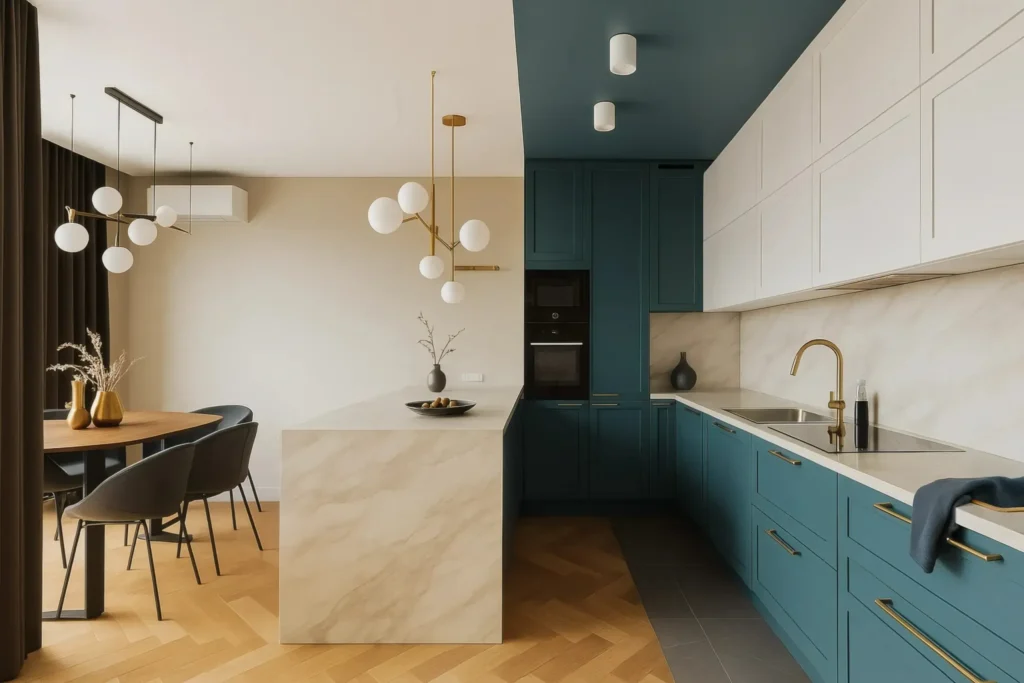
Doors, drawer fronts, end panels and frames resprayed to a hard, even finish, with the units left exactly where they are.


5-Star Rated · Fully Insured · Free Quotes
Timperley is a suburb of 1930s semis whose owners improve rather than move. The kitchens in those houses are frequently fifteen years old, structurally sound and simply the wrong colour. House painters in Timperley are asked about respraying them more often than almost anything else.
Done properly it is transformative and the units never come out. Done without degreasing, it peels by Christmas. As part of our Manchester house painters, every WA15 address is covered — Timperley village, Riddings, Wellgreen, Brooklands and out towards Hale Barns.
Services
Timperley grew almost entirely between the wars, so the housing is remarkably consistent — bay-fronted semis with original panelled doors, picture rails and deep skirtings, plus post-war and modern estates at the edges. Spraying suits that stock unusually well.
Doors, drawer fronts, end panels and frames resprayed to a hard, even finish, with the units left exactly where they are.
Built-in wardrobes, bookcases, dressers and freestanding pieces sprayed rather than brushed, so no strokes show.
Original 1930s panelled doors and architraves, prepared back and finished flat — the detail sharp rather than clogged.
Whole-house repaints, single rooms and the hall, stairs and landing that every Timperley semi seems to share.
Render, masonry, bay window frames, fascias and garage doors across WA15 semis and detached homes.
Feature walls, full rooms, lining and stripping, with walls made good before anything new goes up.
Roughly 60 per cent of time on site is preparation, and on a kitchen it is closer to three quarters. Doors come off and are labelled, hinges and handles are removed, and every surface is degreased before it is keyed. The spraying itself is the quick part, which is exactly why a cheap quote is usually a short prep.
The full method is on our preparation and finishing page. Whatever the job, a free, no-obligation quote comes first — and if your doors are not suitable for spraying, you will be told before anything is booked.
Spray finishing
A cabinet door is a large, flat, close-up surface in a bright room. Every brush mark shows on it. Spraying exists because there is no other way to lay a coating down that evenly — and because kitchens ask more of a finish than any other surface in the house.
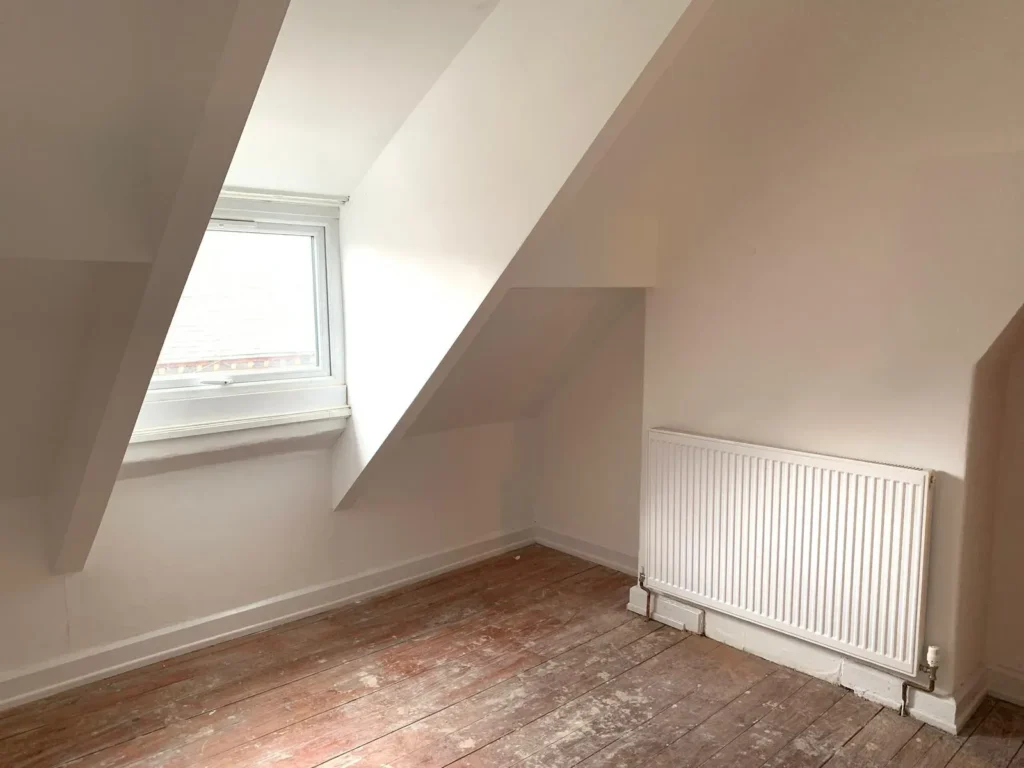
Kitchen doors carry a film of cooking grease you cannot see, especially around the hob and the bin cupboard. Nothing adheres through it. Every door is degreased, then keyed, then primed. Where a sprayed kitchen peels within a year, this is almost always the step that was skipped.
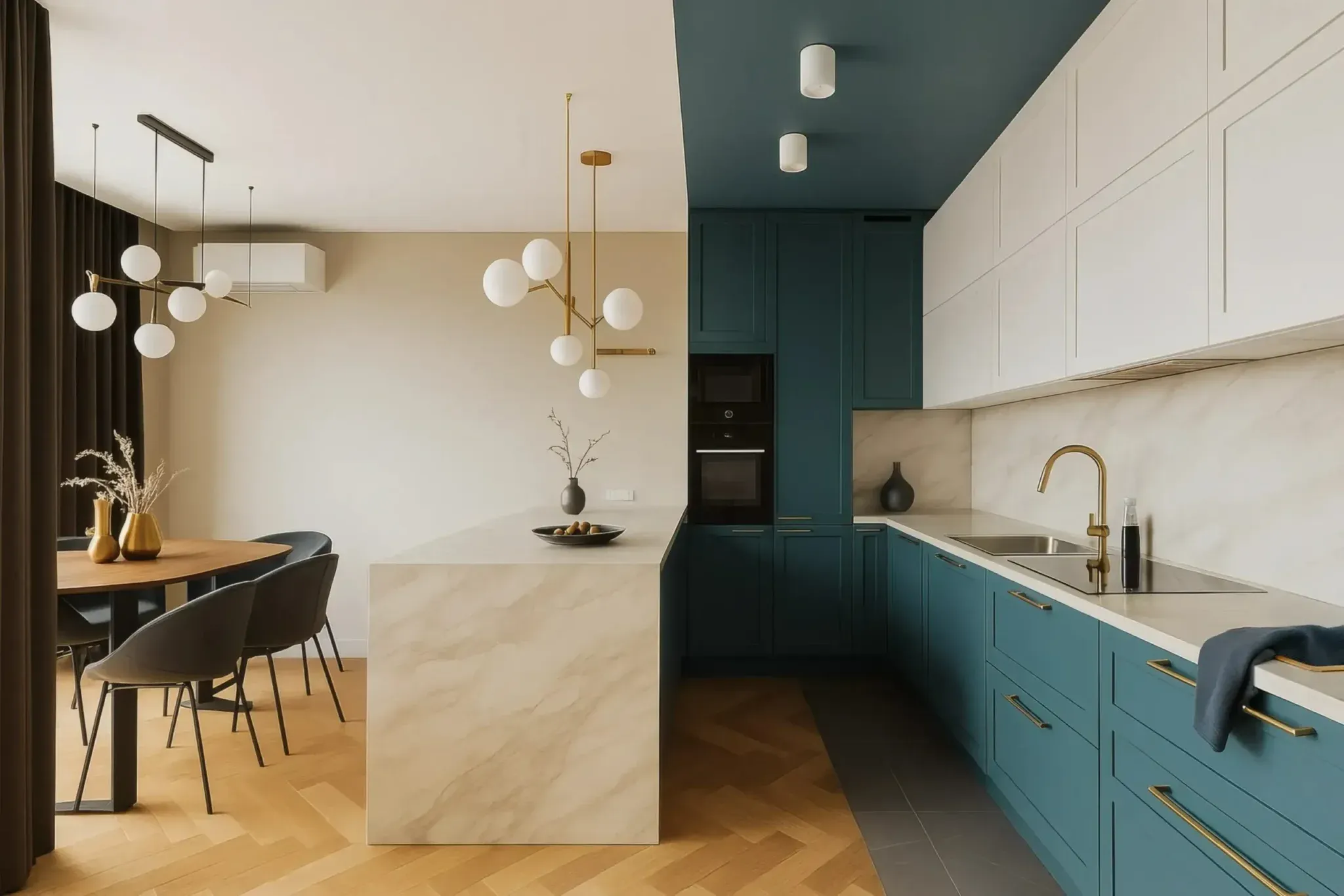
Cabinets get opened, wiped, knocked and cleaned constantly. A two-pack lacquer cures chemically rather than just drying, which is why it stands up to that where ordinary trim paint does not. It is touch dry quickly but keeps hardening for around a week.
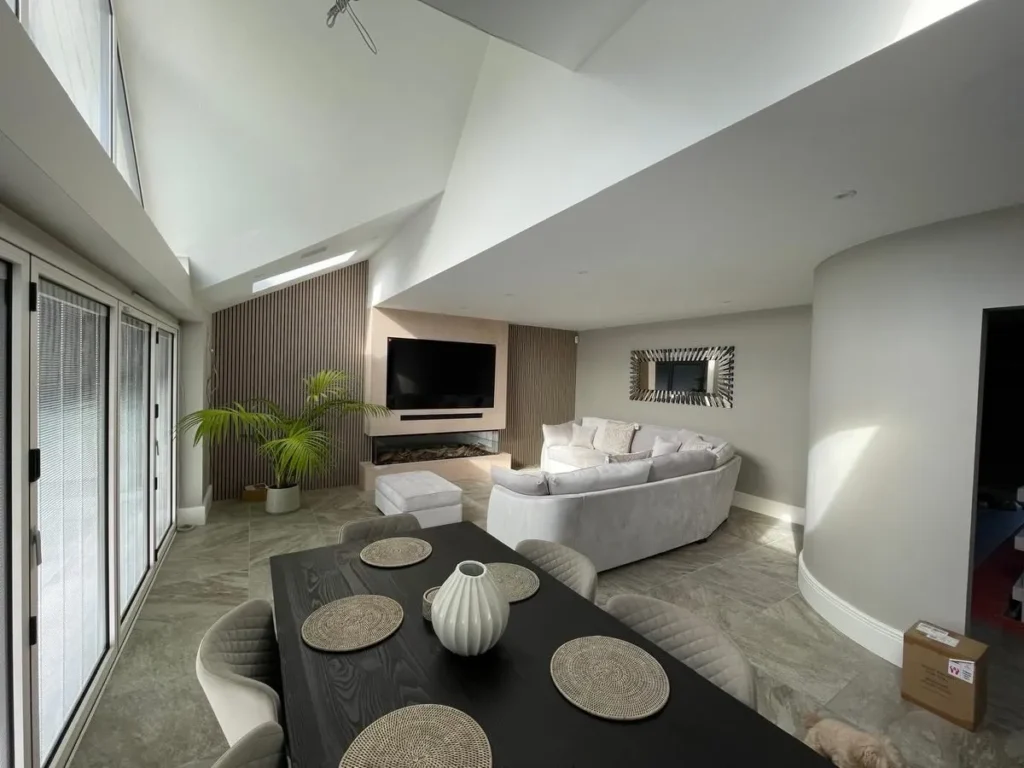
Doors are sprayed off the property in a controlled space. Carcasses and frames are sprayed in situ behind full masking and sheeting, with extraction running. The kitchen is usable in the evenings for most of the job, which matters in a family house.
Suitability
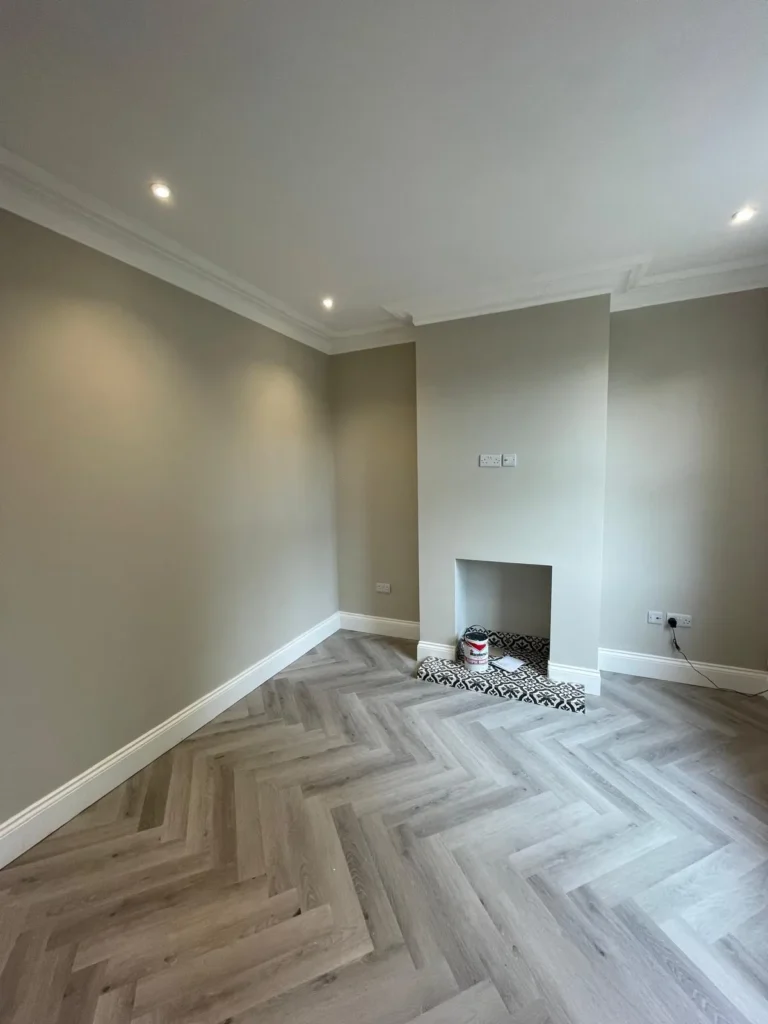
Not every kitchen is a candidate, and it is far better to know that at the quote than halfway through. This is what a Timperley survey checks before anything is agreed.
Assessed on site. Where adhesion is uncertain, a test patch goes on a spare door or a hidden panel before the kitchen is committed.
The process
No guesswork, no surprises and no deposit chasing. Three steps, start to finish.
Door material is identified, adhesion checked and a colour agreed. Sprayed finishes are mixed to any reference, so a sample is sprayed rather than guessed from a chart.
Doors removed and labelled, ironmongery bagged, everything degreased and keyed. Doors sprayed off site, carcasses masked and sprayed in place, then rehung and adjusted.
We go round the finished kitchen with you in daylight, checking alignment as well as finish. You are told how long to be gentle with it while the lacquer reaches full hardness.
Areas covered
Every WA15 street is served, along with the neighbouring Trafford areas on the same rounds.
Neighbouring towns have pages of their own — our Altrincham house painters, Sale house painters and Wythenshawe house painters. Recent finishes are on our painting projects page.
Our projects
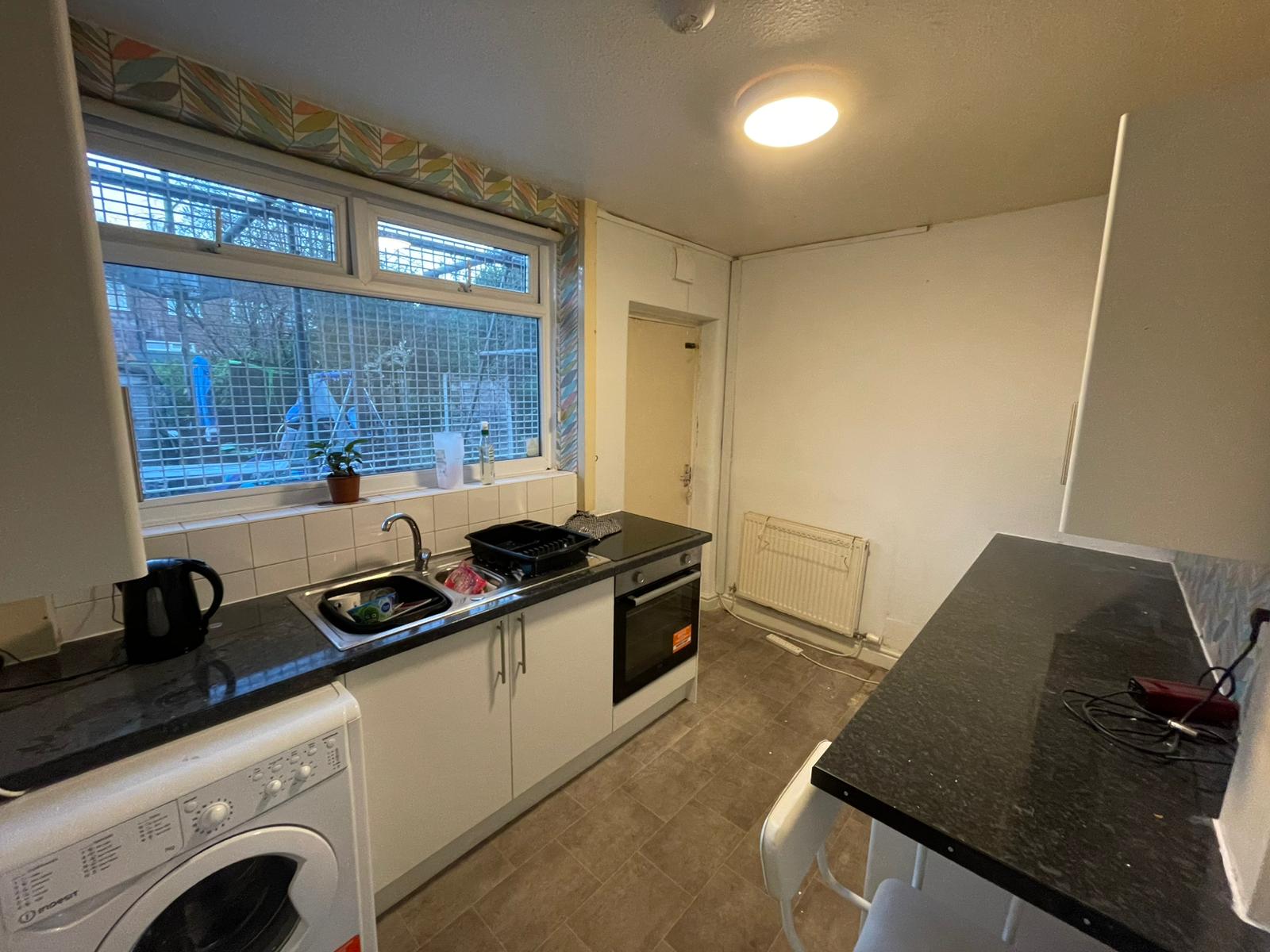
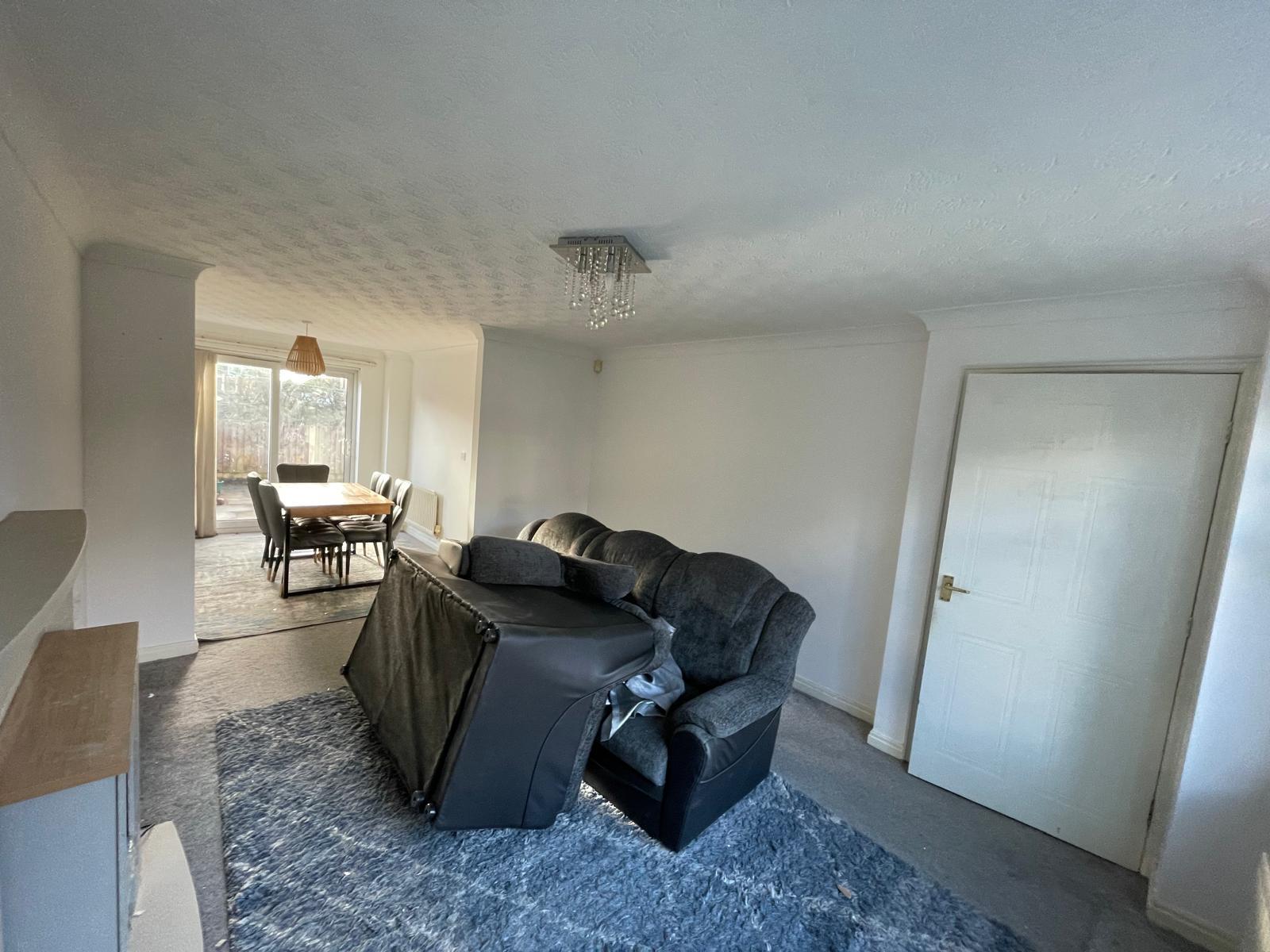
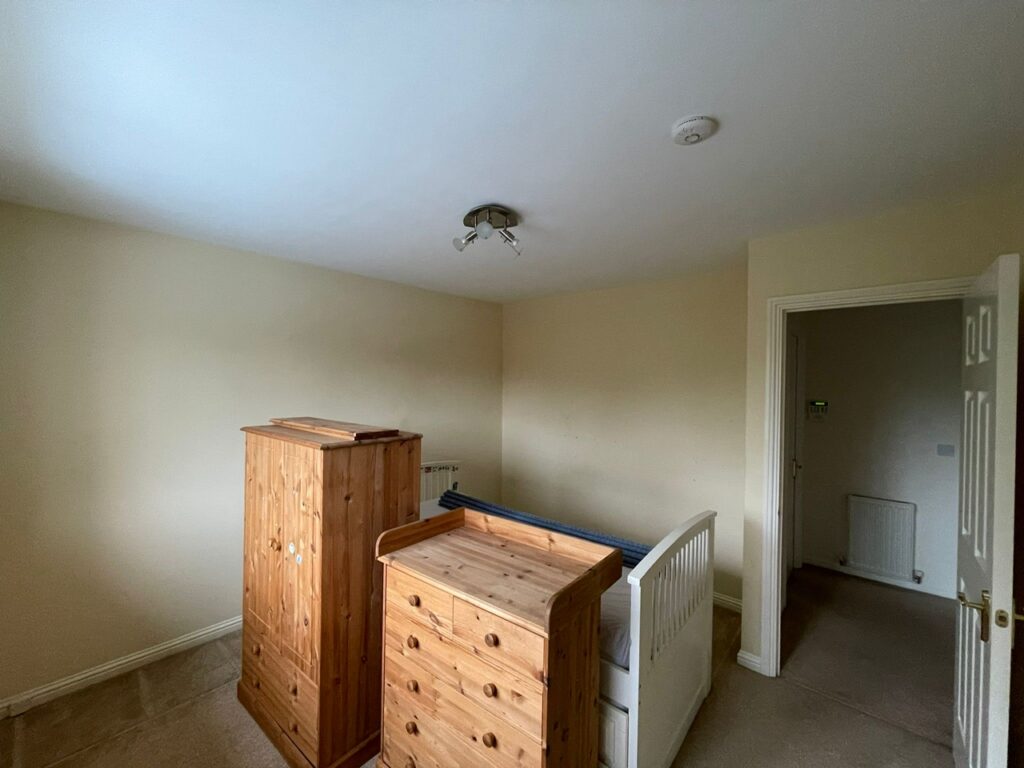
Our completed projects show the standards, attention to detail and professional workmanship brought to every job. From Trafford family homes to commercial and industrial property, each one reflects durable finishes and clean execution.
Questions
For cabinet doors, yes — and it is not a close call. A door is a large flat panel viewed from a foot away in a bright room, so every brush mark and roller stipple is visible. Spraying lays the coating down evenly with no texture at all. Brushing still has its place on frames and awkward returns, but the doors themselves want spraying.
Most Timperley kitchens take three to five working days depending on the number of doors. Doors go away to be sprayed, and the carcasses are masked and sprayed in place. You lose the use of cupboard doors while they are off, but the kitchen itself stays largely usable in the evenings. Plan for the units to be doorless for a couple of days rather than the whole job.
Not if the preparation was right. Peeling is almost always an adhesion failure caused by grease left on the doors, and it shows up within months. Degreasing, keying and the correct primer for the door material are what prevent it. A two-pack lacquer topcoat then cures chemically and takes daily use far better than ordinary trim paint.
Melamine and laminate can, with an adhesion primer suited to slick surfaces. Vinyl-wrapped doors can too, provided the wrap is fully intact. Where the wrap has already started lifting at the edges or around the oven housing, spraying will not re-stick it and the finish will fail along those edges. In that situation replacing the doors and spraying the frames is the honest answer.
Doors, drawer fronts and end panels are removed, labelled and sprayed off the property in a controlled space, which gives a far cleaner finish than any amount of masking in a kitchen. Carcasses, frames and plinths are sprayed in situ behind full sheeting with extraction running. Everything is rehung and adjusted at the end.
Yes. Fitted wardrobes, bookcases, dressers and freestanding furniture all benefit from the same treatment, as do internal doors and 1930s panelled joinery where a flat finish is wanted. Garage doors and exterior metalwork are sprayed too. uPVC windows can be resprayed, though they need a specific primer system and are quoted separately.
Yes. Comprehensive public liability insurance covers all residential and commercial painting and spraying work across Timperley, Trafford and the wider Greater Manchester area. Documentation is available on request.
Get in touch
Let's make your space shine. Get in touch today and expect a response within 24 hours. Quotes are free, fixed and completely no-obligation.