

“Why are painters so expensive in the UK?” It is one of the most searched questions about painting and decorating online. If you have ever received a quote for painting a few rooms and felt that the price seemed high, you are not alone.
But here is the truth. Professional painting is not just about rolling paint onto a wall. It is a skilled trade that involves years of training, specialist materials, proper preparation, and a level of care that protects your biggest asset: your home.
This guide explains exactly what your money pays for when you hire a professional painter in Manchester. By the end, you will understand why cutting corners on painting costs more in the long run, and why investing in quality work is one of the smartest home improvement decisions you can make.
If you are ready to get a quote from experienced professionals, contact Prestige Painting Solutions for a free, no-obligation estimate.
What Does a Painter’s Rate Actually Cover?
When you see a daily rate of £150 to £250 or a room price of £200 to £500, it is easy to think that seems expensive for “just painting.” But the reality is that a painter’s rate covers far more than the time spent holding a brush.
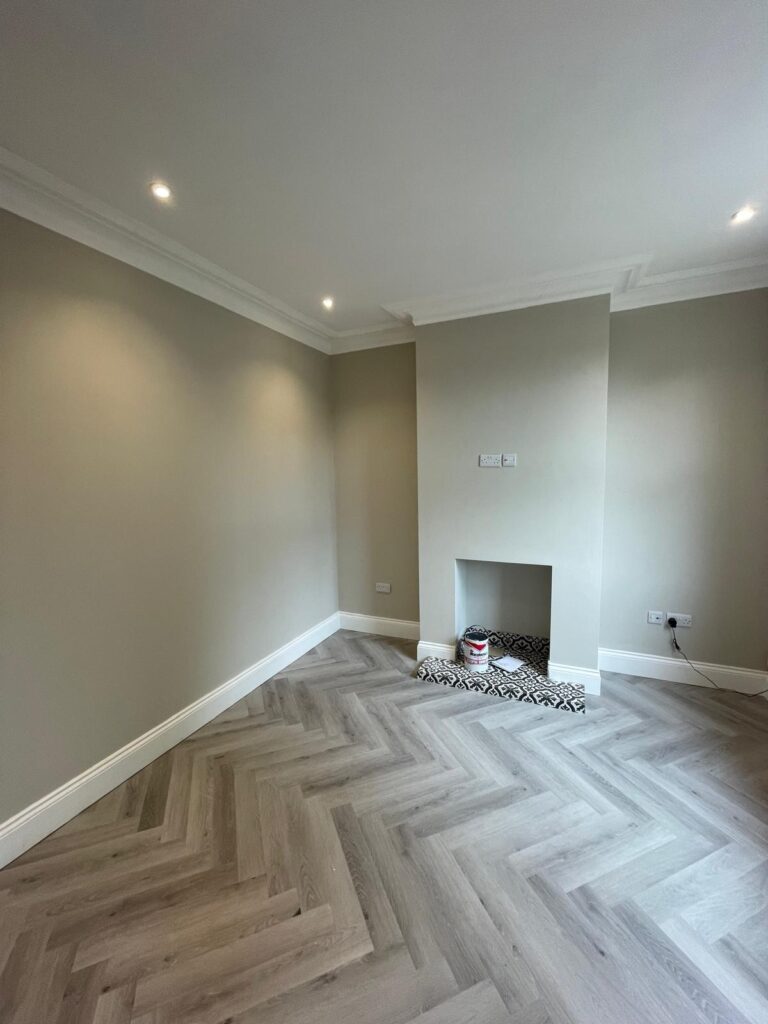
Skill and Experience
A qualified painter and decorator has typically completed a formal apprenticeship or City & Guilds qualification, followed by years of hands-on experience. Cutting in a clean line where a wall meets a ceiling, achieving a smooth finish on woodwork without brush marks, and knowing exactly how to treat different surfaces all require genuine skill that takes years to develop.
In Manchester alone, painters work across dozens of different property types. Victorian terraces in Didsbury with ornate coving and picture rails. 1930s semis in Stockport with artex ceilings. Modern apartments in Salford Quays with floor-to-ceiling glass. Each presents unique challenges that only experience can navigate.
Surface Preparation
This is the part of the job that most people underestimate. Proper preparation typically accounts for 40 to 60 percent of the total time on any painting project. It includes:
- Filling cracks, holes, and dents in plaster
- Sanding rough surfaces and between coats
- Scraping loose or flaking paint
- Treating damp patches and mould with specialist sealers
- Applying primer to bare plaster, wood, or metal
- Applying stain blocker over water marks or nicotine staining
- Washing down greasy kitchen walls and glossy surfaces to ensure paint adhesion
Skip any of these steps and the paint will fail. Peeling, bubbling, cracking, and uneven coverage are almost always the result of poor preparation, not poor paint.
Read more about our preparation and finishing process and why we never cut corners on this step.
Insurance and Business Costs
Every reputable painter in the UK carries public liability insurance, typically between £1 million and £5 million of cover. This protects you if anything goes wrong during the project, from accidental damage to your property to third-party claims.
Beyond insurance, a self-employed painter also covers:
- Vehicle costs (fuel, insurance, maintenance)
- Tools and equipment (brushes, rollers, dust sheets, scaffolding, sanders)
- Accounting and tax compliance
- Materials storage
- Ongoing training and product knowledge
- Marketing and business administration
These overheads are real and significant. They are baked into every quote you receive, even though they are never listed as a separate line item.
Quality Materials
Professional painters use trade-grade products that are not available in most retail stores. Dulux Trade, Crown Trade, Zinsser, and Johnstone’s Trade offer superior coverage, durability, and colour consistency compared to their retail counterparts.
A single litre of Dulux Trade Diamond Matt covers approximately 14 square metres per coat and lasts 8 to 10 years on interior walls. A budget retail emulsion might cover less area, require an extra coat, and start to look tired within 3 to 4 years. The upfront saving on cheaper paint is quickly wiped out by the need to repaint sooner.
Professional Painting vs DIY: The Real Cost Comparison
Many homeowners consider doing it themselves to save money. And for a simple, small job in a room that is already in good condition, DIY can work perfectly well.
However, for anything beyond a quick single-coat refresh, the numbers often tell a different story.
| Factor | DIY | Professional |
| Time (3-bed house interior) | 2 to 4 weekends (40 to 80+ hours) | 5 to 8 working days |
| Finish quality | Varies. Cutting-in and woodwork often patchy | Clean, sharp lines. Smooth, even coverage |
| Paint cost | Retail paint: often need 3+ coats | Trade paint: better coverage in 2 coats |
| Preparation | Often skipped or rushed | Thorough filling, sanding, priming |
| Durability | 2 to 3 years before touch-ups needed | 5 to 10 years before redecoration |
| Equipment needed | Must purchase rollers, brushes, dust sheets, tape, ladders, fillers, sandpaper | Included in the quote |
| Stress level | High. Especially stairwells, ceilings, and woodwork | Low. You hand over the keys |
| Total cost (3-bed interior) | £300 to £600 in materials plus your time | £1,200 to £2,500 all-in |
The headline cost of DIY looks cheaper. But factor in your time (at any reasonable hourly value), the higher paint consumption with retail products, the equipment you need to buy, and the likelihood of needing to repaint sooner, and the gap narrows significantly.
Furthermore, a poor DIY job can actually reduce the perceived value of your home. Wavy cutting-in lines, roller marks on ceilings, and paint drips on skirting boards are immediately visible to anyone viewing the property. A professional finish, by contrast, adds to your home’s kerb appeal and perceived value.
Is It Cheaper to Paint Interior or Exterior?
This is a common question from homeowners planning a full redecoration. Generally, interior painting is cheaper per square metre than exterior painting. There are several reasons for this.
- Exterior surfaces need specialist weather-resistant paints and masonry coatings that cost more per litre than standard interior emulsions
- Exterior preparation is more intensive: power washing, scraping, treating rot, applying stabiliser to powdery surfaces
- Access equipment (scaffolding, tower scaffolds, ladders) adds cost on multi-storey properties
- Weather dependency means exterior work can only be done during dry, mild conditions (typically April to October in Manchester), which limits scheduling flexibility
- Exterior paint needs to withstand UV exposure, rain, frost, and temperature fluctuations, requiring more durable (and more expensive) products
As a rough guide, exterior painting costs 20 to 40 percent more than interior painting for the same property. However, exterior paint jobs typically last longer when done properly, as trade-quality masonry paint can protect surfaces for 10 to 15 years.
Compare our interior painting and exterior painting services to see what each includes.
How Much Do Painters Actually Earn in the UK?
Understanding how much a self-employed painter and decorator earns helps put pricing into perspective. The figures may be lower than you expect.
Employed Painter and Decorator
An employed painter working for a decorating company in Manchester typically earns between £22,000 and £32,000 per year. The national minimum wage for a painter and decorator (as for all workers aged 21 and over in 2026) is £12.21 per hour, though most experienced painters earn well above this.
Entry-level positions and apprenticeships start lower, around £18,000 to £22,000 per year. Experienced painters with specialist skills (such as spray finishing, heritage restoration, or industrial coatings) can earn £35,000 to £40,000 or more.
Self-Employed Painter and Decorator
So, how much do self-employed painters make in the UK? Typical annual turnover for a sole trader painter in Manchester ranges from £30,000 to £50,000.
However, turnover is not the same as take-home pay. Once you deduct materials, vehicle costs, insurance, tools, accounting, and other business expenses, the actual profit margin for most self-employed painters sits between 30 and 50 percent of turnover. That means a painter turning over £40,000 per year might take home £12,000 to £20,000 after all expenses.
This is important context. When a painter quotes £200 for a day’s work, they are not pocketing £200. After materials, fuel, insurance, wear on tools, and tax, the actual earnings from that day might be £80 to £120.
| Earnings Breakdown | Employed Painter | Self-Employed Painter |
| Annual salary/turnover | £22,000 to £32,000 | £30,000 to £50,000 |
| Hourly equivalent | £11 to £16/hr | £15 to £25/hr (after expenses) |
| Expenses covered by | Employer | Painter (from turnover) |
| Insurance | Employer provides | Paid from own pocket |
| Holiday/sick pay | Included | Not included |
When viewed in this context, painter rates are not excessive. They reflect the cost of running a legitimate, insured trade business while earning a modest living.
What About Painting Someone’s House for Free?
The search term “painting someone’s house for free” appears regularly in Google data. It typically comes from two types of searchers.
Community and Charitable Painting
Some community organisations, charities, and volunteer groups offer free decorating services to elderly, disabled, or vulnerable residents. In Manchester, local councils and housing associations occasionally run schemes to help residents who cannot afford essential maintenance. These programmes are valuable and serve a genuine need.
If you are in a situation where you need help with painting costs, it is worth contacting Manchester City Council, your local housing association, or community volunteer groups to ask about available support.
Friends and Family Painting for Free
Having a friend or family member paint a room for free is generous and well-intentioned. However, it comes with risks:
- No insurance cover if something goes wrong
- Preparation steps are usually skipped or done poorly
- Retail-grade paint is used instead of trade-quality products
- The finish quality is unpredictable
- If the result is poor, the relationship dynamic makes it difficult to raise the issue
For a single bedroom in good condition, asking a capable friend to help can work fine. For anything larger, multiple rooms, woodwork, or surfaces in poor condition, investing in a professional will save money and frustration in the long run.
How to Know You Are Getting Good Value from a Painter
Not all painters are equal. Here is what to look for when assessing whether a quote represents good value:
- Detailed written quote: A professional will provide an itemised quote listing exactly what is included (rooms, surfaces, number of coats, paint type, preparation work). Avoid anyone who gives you a price on the back of a hand
- Insurance: Ask for proof of public liability insurance. Any reputable painter will happily provide this
- References or reviews: Check Google reviews, Checkatrade, or ask for recent customer references. Look for consistent praise about preparation quality and finish, not just speed
- Preparation commitment: A good painter will talk about preparation during the quoting visit. If a painter only talks about colour and finish without mentioning prep, that is a warning sign
- Realistic timeline: Be wary of quotes that promise unrealistically fast completion. Rushing a paint job always compromises quality
- Trade-quality materials: Ask what paint brands they use. Dulux Trade, Crown Trade, Johnstone’s Trade, and Zinsser are all indicators of a professional approach
Learn more about Prestige Painting Solutions and our approach to quality.
The Long-Term Value of Professional Painting
Professional painting is not just a cost. It is an investment that delivers returns in several ways.
Property Value
A freshly painted home in good condition sells faster and for a higher price. Estate agents consistently report that a clean, neutral paint scheme is one of the most cost-effective ways to increase a property’s appeal to buyers. For a relatively modest outlay of £1,500 to £3,000, you could add thousands to your sale price.
Protection
Exterior painting is not just cosmetic. It protects timber from rot, masonry from water ingress, and metalwork from corrosion. Neglecting exterior painting can lead to structural damage that costs far more to repair than the painting itself.
Durability
A professional paint job using trade-quality materials lasts 5 to 10 years on interior surfaces and 8 to 15 years on exterior masonry. Over a 20-year period, you might repaint twice with a professional compared to four or five times with DIY. The lifetime cost is often lower with professional work.
Wellbeing
Fresh, clean walls genuinely affect how a space feels. A well-decorated home feels more comfortable, more inviting, and more yours. That is not a number you can put in a spreadsheet, but it is real value nonetheless.
See how we transform homes on our projects page.
Frequently Asked Questions
Why are painters so expensive in the UK?
Painter rates cover far more than just painting time. A professional’s quote includes years of training and experience, public liability insurance, professional tools and equipment, trade-quality materials, vehicle and travel costs, surface preparation (which accounts for 40 to 60 percent of total project time), and all business overheads. When these are factored in, rates of £150 to £250 per day represent fair value for a skilled trade.
How much does a self-employed painter and decorator earn?
A self-employed painter in Manchester typically turns over £30,000 to £50,000 per year. After deducting materials, insurance, vehicle costs, tools, accounting, and other business expenses, actual take-home profit is usually between £12,000 and £20,000 per year. This is considerably less than many homeowners assume.
How much do self-employed painters make in the UK?
UK-wide, self-employed painter earnings vary by region. In the North West, including Manchester, typical annual turnover is £30,000 to £50,000 with a profit margin of 30 to 50 percent. In London and the South East, turnover can reach £50,000 to £70,000, but higher living costs and business expenses reduce the real-terms advantage.
What is the minimum wage for a painter and decorator?
The UK National Living Wage for workers aged 21 and over is £12.21 per hour as of April 2025. This applies to employed painters and decorators. However, most experienced painters earn well above this, with typical hourly rates of £13 to £18 for employed painters and £20 to £40 per hour for self-employed tradespeople (before expenses).
Is it cheaper to paint interior or exterior?
Interior painting is generally cheaper per square metre than exterior painting. Exterior work requires specialist weather-resistant paints, more intensive surface preparation, and often scaffolding or tower access. As a rough guide, exterior painting costs 20 to 40 percent more than interior work on the same property. However, exterior coatings last longer (8 to 15 years vs 5 to 10 years for interior), balancing the cost over time.
Can I get my house painted for free?
In some cases, yes. Community organisations, local councils, and charitable groups occasionally offer free or subsidised decorating for elderly, disabled, or vulnerable residents. Contact Manchester City Council or your local housing association to ask about available schemes. For most homeowners, however, professional painting at a fair rate is the best route to a quality, lasting result.
Is professional painting worth the money compared to DIY?
For most projects, yes. A professional delivers a higher-quality finish that lasts 2 to 3 times longer than a typical DIY job. Professionals also complete the work faster (saving you weekends of effort), handle all preparation properly (preventing premature paint failure), and use trade-grade materials that offer superior coverage and durability. The upfront cost is higher, but the lifetime cost is often lower.
Get Your Free Painting Quote in Manchester
Now you understand what professional painting involves and why it costs what it does, the next step is simple. Get a quote and see for yourself.
Prestige Painting Solutions provides free, no-obligation quotes for all painting and decorating projects across Greater Manchester. We are transparent about what is included, we use trade-quality materials, and we never skip preparation.
- 5-star rated on Google
- Fully insured professionals
- Free no-obligation quotes
- Response within 24 hours
Request your free quote online or call us directly on 07835 733353.
