

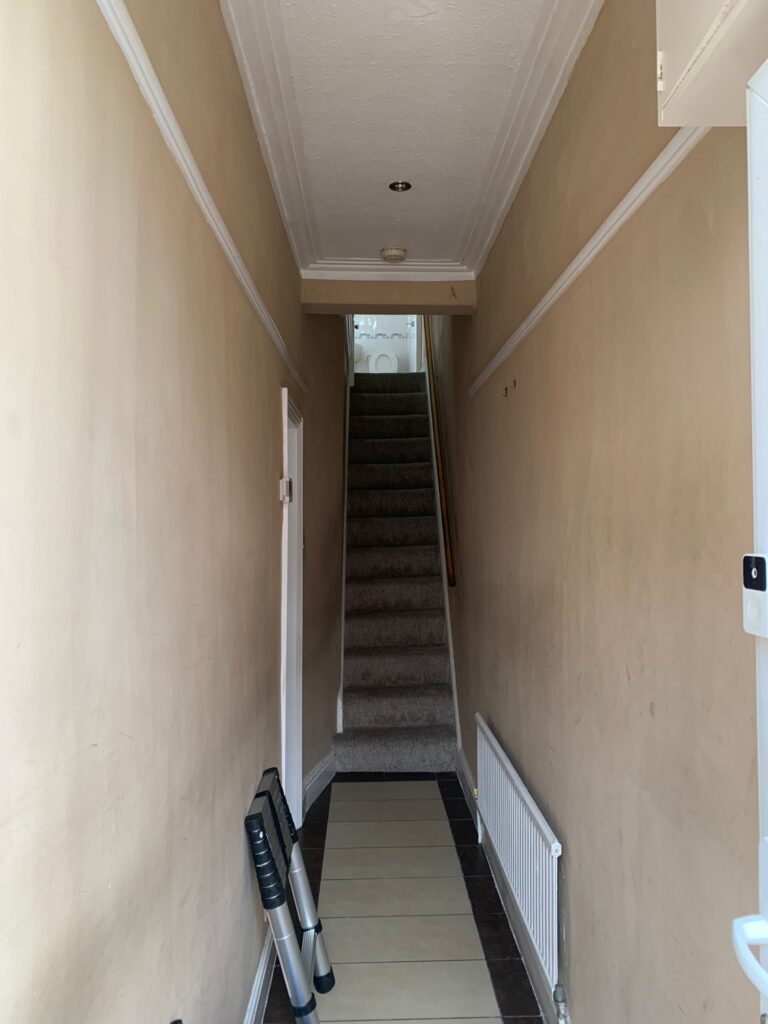
Hall Stairs & Landing Painting Guide is one of the most technically demanding interior painting jobs in any home. It is the first thing visitors see. It is used dozens of times a day. And it involves awkward angles, high ceilings, and tight access that catch most homeowners off guard. This guide covers everything — what it costs to paint hall stairs and landing in Manchester, how to paint a ceiling safely in a stairwell, step-by-step preparation, and when to call in a professional interior painting service.
Why Hall Stairs & Landing Painting Is Harder Than It Looks
Most homeowners glance at the hallway and assume it is a straightforward afternoon job. In reality, a hall, stairs and landing is a multi-level space with some of the most challenging access in any domestic property.
The difficulties are specific and real:
- Stairwell ceilings often reach four to six metres at their highest point — far beyond the safe reach of a standard stepladder
- The angled soffit above a staircase creates an awkward junction between wall and ceiling that requires careful cutting-in
- Narrow hallways in Manchester’s terraced stock restrict ladder positioning and make working safely more complex
- Multiple surface types are present simultaneously — emulsion walls, ceilings, gloss or satinwood woodwork, banisters, and spindles
- The hallway is a high-footfall area that shows every scuff, mark, and fingerprint — a substandard finish is never hidden here
- It is the first room every visitor sees, which makes the standard expected considerably higher than a bedroom or utility room
Furthermore, getting this job wrong is costly. A poorly finished stairwell is difficult and disruptive to revisit. Doing it properly from the outset — with correct preparation, suitable access equipment, and the right paint — is always the better investment.
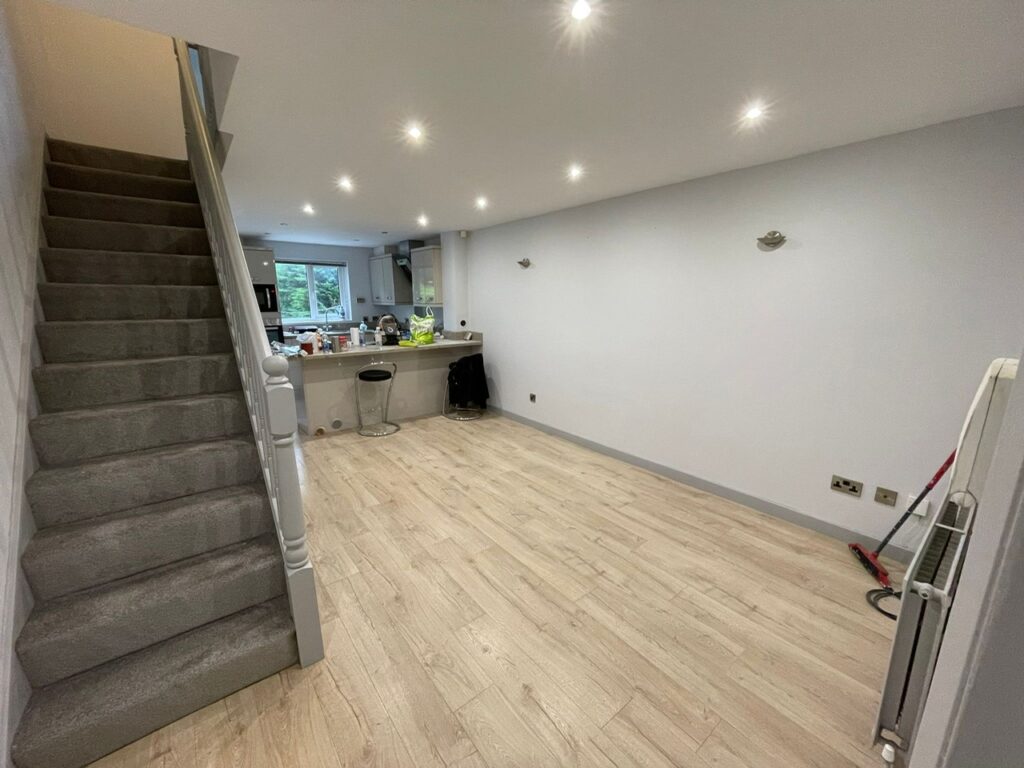
How Much Does It Cost to Paint Hall, Stairs & Landing in Manchester?
This is the question most Manchester homeowners ask first, Hall Stairs & Landing Painting Guide and it deserves a direct answer.
Costs in 2026 vary based on property size, ceiling height, surface condition, and the number of surfaces included. The figures below reflect realistic labour and materials costs across Greater Manchester — not national averages.
Hall, Stairs & Landing Painting Costs — Quick Reference
| Property Type | Approx. Cost (Labour & Materials) | Typical Duration |
|---|---|---|
| Flat / Apartment Hallway | £300 – £500 | 1 – 1.5 days |
| 2-bed mid-terraced house | £450 – £700 | 1.5 – 2 days |
| 3-bed semi-detached | £600 – £900 | 2 – 3 days |
| 4-bed detached | £800 – £1,300 | 2.5 – 3.5 days |
| Large Victorian terrace (period features) | £1,000 – £1,800+ | 3 – 5 days |
What’s Included
These figures typically cover two coats of emulsion on walls and ceilings, one to two coats of satinwood or gloss on all woodwork, and basic surface preparation including filling minor cracks and sanding. Significant surface repairs, wallpaper removal, or specialist access equipment for very high stairwells may be quoted separately.
What Affects the Cost to Decorate Hall, Stairs & Landing?
Surface condition is the single biggest variable. A hallway recently decorated and in sound condition costs significantly less than one with cracked plaster, damp staining, or layers of old wallpaper. Preparation is always priced into a professional quote — and rightly so. It is where the quality of a finished job is determined.
Ceiling height and access have a direct effect on price. A standard two-storey hallway with a reasonably sized stairwell is manageable with a combination ladder. However, a three-storey Victorian property in Didsbury or a converted warehouse apartment in Ancoats with a double-height hallway requires a scaffold tower. The set-up time for safe working at height is real and must be factored in honestly.
Period property features add meaningful time to any job. Properties throughout Chorlton, Levenshulme, Heaton Moor, and the wider Stockport area frequently feature elaborate coving, picture rails, dado rails, panelled doors, and decorative spindles. Each detail requires patient cutting-in and careful preparation.
Paint quality matters more in high-traffic areas than anywhere else in a home. The modest additional cost of Dulux Trade or Crown Trade products over standard retail options translates directly into durability. In a hallway, that difference is measured in years, not months.
How Much Does a Decorator Charge Per Day in Manchester?
An experienced professional painter and decorator in Greater Manchester typically charges between £180 and £280 per day for a single operative in 2026. Day rates vary based on experience, complexity of the job, and whether specialist access equipment is required. A standard hall, stairs, and landing redecoration in a three-bedroom semi will generally take two to three days to complete properly — including preparation.
Be cautious of unusually low day rates. Rushed preparation is the primary cause of painting failures — bubbling, peeling, and patchy finishes that look poor within months of completion.
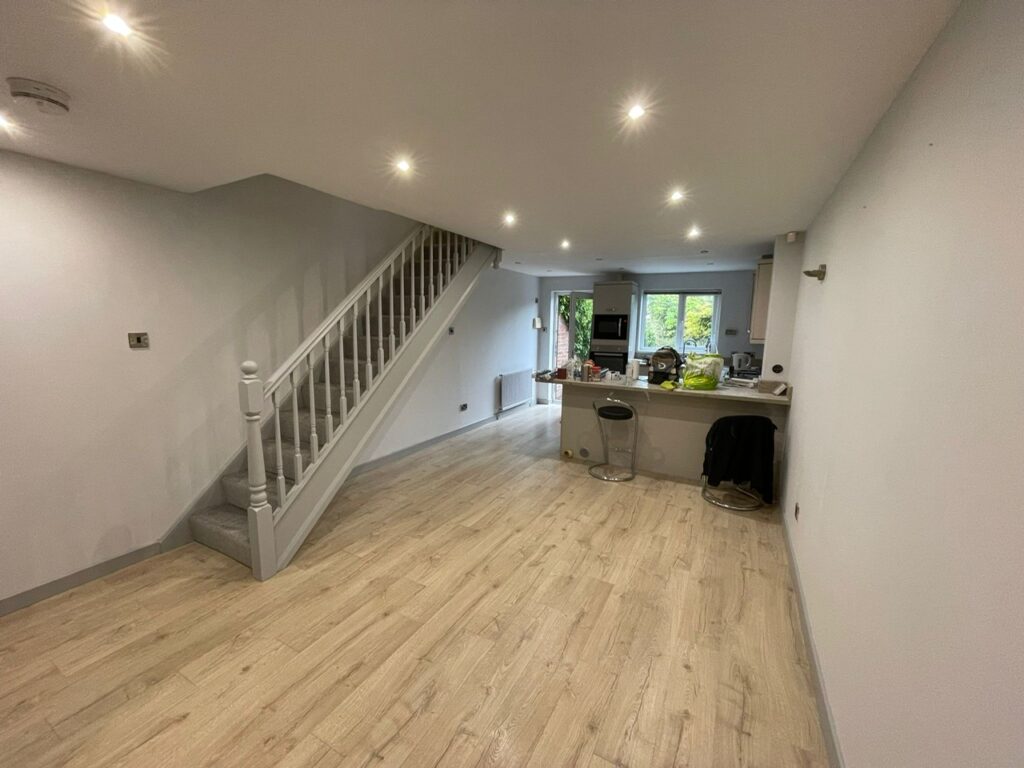
How to Prepare Hall, Stairs & Landing for Painting
Preparation accounts for approximately 60% of the quality of any finished paint job. This is not an exaggeration. Professional painters know this. It is where results are won or lost.
Clear & Protect the Space
Remove all wall hangings, coat hooks, light fittings where safe to do so, and any furniture. Lay heavy-duty dust sheets over the floor and stair treads. Tape around electrical fittings and door frames. In most Manchester terraced properties, hallways are narrow — protection of floors and carpets is essential from the outset.
Wash All Surfaces Thoroughly
Hallway walls accumulate grease, fingermarks, and grime at a rate most people underestimate. Wash all surfaces with a sugar soap solution and allow to dry completely before any paint is applied. Skipping this step is one of the most common DIY mistakes — paint does not bond reliably to dirty or greasy surfaces, regardless of the product used.
Fill & Sand All Imperfections
Inspect every surface carefully in good light. Fill all cracks, holes, and surface damage with a suitable fine-surface filler — Toupret Fine Surface Filler or Polycell Fine Surface Filler are both reliable products. Allow to dry fully, then sand back smooth. Feather the edges of filled areas to prevent raised patches from telegraphing through the topcoat. In older Manchester properties, hairline cracks in plaster are standard — address them properly at this stage.
Prime Bare Areas & New Plaster
All filled patches, bare plaster, and any previously unpainted surfaces must be primed before topcoat emulsion is applied. Zinsser Bulls Eye 1-2-3 is a highly effective all-surface primer for spot-priming. On freshly skimmed or new plaster, apply a mist coat — emulsion diluted approximately 10% with clean water — to seal the surface and prevent uneven absorption of the topcoat. See our dedicated surface preparation and finishing service for further detail.
Sand All Woodwork
Sand all woodwork — skirting boards, door frames, banisters, and spindles — back to a smooth, sound surface. Remove any flaking or peeling paint back to a solid edge. Use 120-grit sandpaper to key the surface, followed by 240-grit to smooth. Apply Zinsser BIN shellac primer to any bare wood or knots in pine spindles to prevent resin bleed-through discolouring the topcoat.
Mask Edges Carefully
Mask around light switches, sockets, and any surfaces receiving different paint finishes to adjacent areas. Precision masking saves significant time during cutting-in and produces sharper, cleaner lines. Frog Tape is widely regarded as the most reliable masking tape for clean paint edges on decorative work.
How to Paint a Stairwell Ceiling — Safe Access & Technique
This is the section that matters most for safety. Painting a ceiling in a stairwell is fundamentally different from painting any other ceiling in a home, because the floor level changes beneath you as you ascend the staircase.
Safe Access Equipment for Stairwells
A standard stepladder cannot be placed safely on stairs. The legs sit at different heights on each tread, creating an unstable base. This is a significant fall risk. The correct access options are:
- Combination ladder (multi-position) — adjustable to different angles, the legs can be set to different lengths to compensate for stair treads. A practical option for most domestic stairwells
- Staircase ladder system — specialist platforms designed with independently adjustable legs specifically for working on stairs. More stable than a combination ladder for prolonged overhead work
- Scaffold tower — the safest option for high or wide stairwells. Provides a full working platform at ceiling height. Recommended for three-storey properties or Victorian homes with very high stairwells
- Podium steps — suitable for lower sections of the hallway and the landing area but not adequate for reaching stairwell ceilings
Safety Warning
Never balance a standard ladder against a sloped ceiling above stairs. Never improvise with kitchen chairs or stacked boxes on stair treads. Falls from height in stairwells are serious and entirely avoidable with the correct equipment. If in any doubt, the safer decision is always to engage a professional.
Painting the Ceiling — Step-by-Step Technique
Once safe access is established, the technique for painting a stairwell ceiling follows established professional practice:
- Choose the right ceiling paint. Dulux Trade Diamond Matt provides a flat, light-reflecting finish that minimises visible imperfections and is washable — important in a hallway. Crown Trade Contractor Matt is a reliable, cost-effective alternative for straightforward repaints.
- Cut in first. Using a 2-inch or 2.5-inch quality angle brush, paint a neat band around all coving, wall junctions, and light fittings before the roller is introduced. Use a Purdy or Hamilton Perfection brush for the sharpest edges.
- Roll the main field. Use a medium-pile roller (10mm nap) on an extension pole to cover the main ceiling area. Work in parallel strips and always roll toward a wet edge to prevent lap marks and join lines showing in the dried finish.
- Work systematically. Ceiling painting is always more effective with two people — one cutting in continuously ahead of the other rolling. This keeps wet edges manageable and prevents the classic striped finish that results from cut edges drying before the roller reaches them.
- Apply two coats. Allow a minimum of two hours between coats under normal conditions. In cold or damp conditions — common in Manchester during autumn and winter — allow longer. A second full coat is always required for a professional-standard, opaque finish.
Pro Tip
Always paint the ceiling before the walls. Any ceiling paint that drops or splashes onto walls will be covered by the subsequent wall coat. Reversing this order creates unnecessary touch-up work.
The Angled Soffit — Cutting In on the Slope
The sloped soffit above a staircase — the angled ceiling that follows the pitch of the stairs — is the most technically demanding surface in the entire job. It requires cutting-in accurately along a diagonal line in a position that is difficult to reach steadily.
Professional painters approach this with patience and the right brush. A smaller 1.5-inch or 2-inch cutting-in brush gives more control on the slope. The brush should be loaded conservatively to minimise drips in an overhead position. Multiple careful passes produce a better result than one rushed stroke.
Painting Hall, Stairs & Landing Walls — Choosing the Right Finish
Standard matt emulsion is not the optimal choice for hallway walls. Halls are among the highest-traffic surfaces in any home — constantly brushed by coats, bags, and hands. A durable mid-sheen or eggshell finish significantly outperforms standard matt in terms of washability and longevity.
| Paint Product | Finish | Best For |
|---|---|---|
| Dulux Trade Eggshell | Low sheen | High-traffic walls, reliable durability, broad colour range |
| Crown Trade Clean Extreme | Matt / washable | Families with children, areas requiring frequent cleaning |
| Little Greene Intelligent Matt | Flat matt | Period properties, premium colour depth, excellent coverage |
| Farrow & Ball Estate Emulsion | Flat matt | Premium aesthetic, suited to period homes — use with F&B Estate Eggshell in hallways for durability |
| Zinsser Bulls Eye 1-2-3 | Primer | Spot priming filled areas and bare plaster before topcoat |
Colour Advice for Manchester Hallways
Many hallways in Manchester’s older terraced and semi-detached stock are narrow and receive limited natural light. Lighter, warmer tones — off-whites, warm greys, and soft greens — help open the space without producing a cold or clinical effect.
Darker tones can work beautifully in wider hallways with good light and period features. A popular professional technique is colour-blocking the lower half of the wall in a deeper tone, with a lighter shade above — separated by a dado rail or a painted line. This adds visual interest and places the more durable, darker paint at precisely the level where scuffs and marks occur most frequently.
Painting Banisters, Spindles & Woodwork
Woodwork in the hall, stairs, and landing takes more physical contact than any other woodwork in the house. Banisters and spindles are touched constantly. Skirting boards take regular knocks. A properly applied, durable woodwork finish is not optional here — it is essential.
Woodwork Preparation
The preparation standard for woodwork is high. All surfaces must be sanded back to a smooth, sound base — any flaking or peeling paint removed back to a solid edge. A 120-grit paper to key the surface, followed by 240-grit to smooth, is the professional standard. Apply Zinsser BIN shellac primer to any bare wood or visible knots in pine banisters and spindles to prevent resin bleed-through discolouring the topcoat over time.
Woodwork Paint Options
- Dulux Trade Satinwood — the dependable professional standard. Durable, washable, and available across a wide colour range
- Crown Trade Quick Dry Gloss — faster drying time than traditional oil-based gloss, very durable, produces a high-sheen finish
- Farrow & Ball Estate Eggshell — premium finish with outstanding colour depth. Lower sheen than traditional gloss, suited to period properties where a softer woodwork tone is preferred
- Little Greene Intelligent Eggshell — excellent coverage, durable finish, suitable for all interior woodwork
For painted spindles, a small radiator roller speeds up the process considerably on turned or plain profiles. Use a brush to cut in around the base of each spindle, the nosing of each tread, and all fine edges. Apply two coats, allowing adequate drying time between — woodwork paints feel dry to touch within two hours but require 24 to 48 hours to harden fully before normal use.
For a full professional result on all interior woodwork throughout your home, see our interior painting service.
Common Mistakes to Avoid When Painting Hall, Stairs & Landing
After completing hall, stairs, and landing projects across hundreds of Manchester properties — from compact terraces in Cheadle and Reddish to large Victorian homes in Didsbury and Bramhall — the same errors appear repeatedly.
- Skipping or rushing preparation. The single most costly error. Poor preparation guarantees a poor result, regardless of paint quality
- Not washing walls before painting. Adhesion fails on grease or grime. Sugar soap and thorough drying is non-negotiable
- Using a standard stepladder on stairs. Unstable, dangerous, and illegal under health and safety guidance for commercial work. Even for domestic DIY, it is an avoidable risk
- Applying topcoat directly to bare plaster. Paint absorbs unevenly and the finished surface looks patchy and inconsistent
- Rushing between coats. Two hours minimum at 20°C. Longer in winter or poor ventilation. Second coats applied too soon will drag, roll, and pull off the first coat
- Using standard retail paint in high-traffic areas. False economy. Standard emulsion will scuff, mark, and require repainting within twelve to eighteen months in a busy hallway
- Painting the walls before the ceiling. Always do ceilings first. Drips and splashes will land on unpainted walls and be covered by subsequent coats
- Not protecting stair treads. Paint drips on carpet or hardwood stairs are difficult and sometimes impossible to remove cleanly
When to Call a Professional Painter & Decorator
Some hallway painting jobs are genuinely within the capabilities of a competent and patient DIYer. However, several situations are best left to an experienced professional.
- High stairwells in three-storey or Victorian properties — working safely at five to six metres above stair treads requires specialist access equipment and working-at-height experience that most homeowners do not have
- Period properties with complex features — coving, picture rails, panelling, and decorative spindles require trade skill to produce sharp, clean edges throughout
- Significant surface repairs — cracked plaster, damp staining, or wallpaper removal followed by re-lining should be handled professionally. These are not preparation tasks that can be rushed
- Full redecoration including wallpaper — if the plan includes wallpapering services to the hallway or landing, professional hanging in a stairwell is strongly recommended
- Complete property renovations — when hall, stairs, and landing forms part of a wider interior redecoration, a professional team coordinates all surfaces efficiently and to a consistent standard. See our residential painting service for full project work across Manchester
A professionally prepared and painted hall, stairs, and landing will typically last five to eight years with normal use. A DIY job that has compromised on preparation may need revisiting within twelve to eighteen months.
Frequently Asked Questions
How much does it cost to paint hall stairs and landing in Manchester?
In 2026, realistic costs for painting hall, stairs, and landing in Manchester range from approximately £450 for a compact two-bedroom terraced house up to £1,800 or more for a large period property with high ceilings, elaborate features, and significant woodwork. The condition of existing surfaces, height of the stairwell, and quality of paint specified all affect the final figure. A free no-obligation quote from Prestige Painting Solutions will give you an accurate, itemised price for your specific property.
How long does it take to decorate hall stairs and landing?
A professional team working on a standard three-bedroom semi-detached house in Greater Manchester typically completes a hall, stairs, and landing redecoration in two to three days. This includes full preparation, priming of bare areas, two coats of emulsion on all walls and ceilings, and one to two coats on all woodwork. A large detached property or Victorian terrace with a high stairwell and period features may take three to five days to complete to a professional standard.
How do you paint a ceiling in a stairwell safely?
A stairwell ceiling cannot be safely reached with a standard stepladder. The floor level changes with each stair tread, making a flat-based ladder inherently unstable. Safe options include a multi-position combination ladder (legs adjustable to different lengths), a staircase ladder system designed specifically for use on stairs, or a scaffold tower for high or wide stairwells. Once safe access is established, the technique is the same as any ceiling — cut in first with an angle brush, then roll the main field using a medium-pile roller on an extension pole, always working toward a wet edge.
What is the best paint for a hallway in the UK?
For hallway walls, a durable mid-sheen or eggshell finish is recommended over standard matt emulsion. High-traffic areas require a surface that can be cleaned without marking. Recommended products include Dulux Trade Eggshell, Crown Trade Clean Extreme, and Little Greene Intelligent Matt Emulsion. All perform significantly better than standard retail matt emulsion under the daily wear a hallway receives. For ceilings, Dulux Trade Diamond Matt provides a washable flat finish that handles the inevitable moisture and marks in a busy hallway.
Do I need to prime hallway walls before painting?
All bare plaster, filled patches, and any previously unpainted surfaces must be primed before topcoat emulsion is applied. On new or freshly skimmed plaster, a mist coat of diluted emulsion (approximately 10% water) should be applied first to seal the surface and prevent the topcoat from absorbing unevenly. On previously painted surfaces in good condition, priming the entire wall may not be necessary — but a light sand with 120-grit paper and a thorough clean with sugar soap is always recommended before recoating for reliable adhesion.
Why Manchester Homeowners Choose Prestige Painting Solutions
Prestige Painting Solutions has completed hall, stairs, and landing projects across Greater Manchester from compact mid-terraced properties in Cheadle, Reddish, and Sale, to large Victorian homes in Didsbury, Bramhall, and Heaton Moor with complex period features and high stairwells.
- Thorough surface preparation — always included, never skimped
- Specialist access equipment for safe stairwell working at height
- Premium trade paint products — Dulux Trade, Crown Trade, Zinsser, Farrow & Ball where specified
- Precision cutting-in on all edges, angles, and junctions
- Full dust sheet protection throughout — floors and stairs always covered
- 5-star rated service with verified reviews from clients across Manchester
- Fully insured — all work covered by comprehensive public liability insurance
- Free no-obligation quotes — transparent, itemised pricing with no hidden costs
We serve Manchester, Stockport, Cheadle, Bramhall, Didsbury, Altrincham, Wilmslow, Sale, Warrington, Bolton, Bury, Oldham, and all surrounding areas. For recent completed projects, visit our projects page. For full details of our residential services, visit our residential and commercial painting page.
